





Sometimes the most disturbing part of a tragedy is not the crime, but the desperate attempt to control what people remember about it.
That is the uncomfortable tension running through the Hathras 16 Days Case Expose the debate even today.
When the Hathras 16 Days incident first erupted into national headlines in 2020, the country was horrified by the brutality of the crime. But as the days unfolded, public outrage expanded beyond the assault itself. Questions surrounding police action, media access, political narratives and the controversial late-night cremation transformed the story into something far larger, a national conversation about whether institutions were protecting justice or protecting themselves.
Years later, those questions still remain painfully relevant.
Now, ZEE5’s Hathras 16 Days documentary series revisits the controversy through a powerful crime documentary that explores how systems respond when public trust begins collapsing under the weight of conflicting narratives.
This is not simply a retelling of a tragic case. It is an OTT documentary examining power, perception and the uneasy relationship between truth and authority in modern India.
How the Hathras 16 Days Case Exposed the Debate Began
The phrase “Hathras 16 Days Case Expose” gained traction because the controversy quickly evolved beyond a criminal investigation into a broader institutional crisis.
As updates emerged, contradictions surrounding official communication intensified public suspicion. Questions were raised about:
- Delayed responses
- Handling of evidence
- Media restrictions
- Public statements from authorities
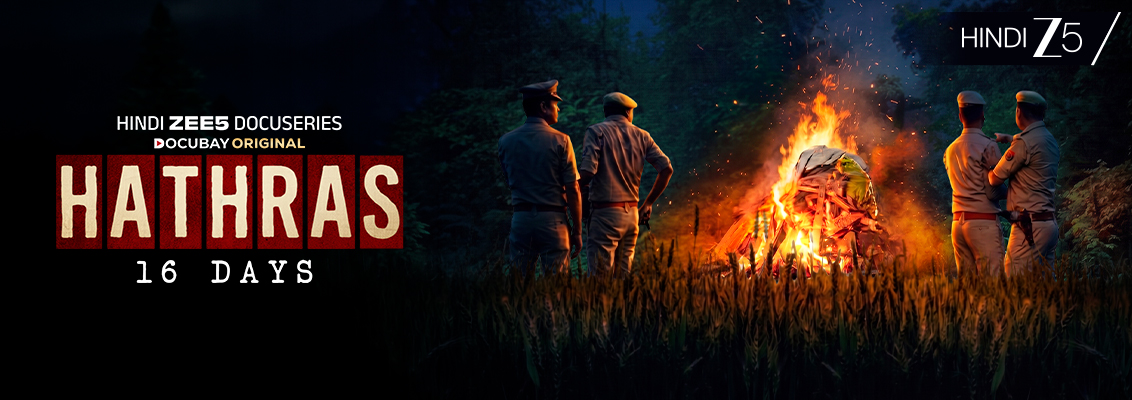
- The late-night cremation was carried out under police supervision.
The ZEE5 thriller docuseries explores how these events collectively created the perception that information itself was becoming controlled territory.
Rather than focusing only on legal developments, the documentary investigates why so many people felt uneasy about the official handling of the case.
Why the Hathras 16 Days Documentary Series Feels Politically and Socially Relevant
The Hathras 16 Days documentary series resonates because it reflects broader public anxiety that extends far beyond a single incident.
Audiences today increasingly question institutions, official statements and media narratives. In that sense, the series arrives at a moment when viewers are actively seeking layered investigative storytelling rather than simplified conclusions.
Actress Anjali Sivaraman portrays the journalist inspired by Tanushree Pandey, whose investigation becomes central to the narrative. Through her character, the crime documentary explores the emotional and professional risks journalists face as they pursue uncomfortable truths in politically sensitive environments.
Her performance captures the exhaustion, frustration, and moral conflict that reporters experience when every fact becomes contested in their stories.
Institutional Failure or Narrative Management?
One of the most compelling aspects of the criminal documentary is its refusal to present easy answers.
Instead, the series repeatedly asks:
Were authorities overwhelmed by escalating public outrage?
Or did systemic suppression shape the response from the beginning?
That ambiguity is precisely what continues to shape the Hathras 16 Days Case. The discussion became emotionally charged years later.
Veteran actor Kumud Mishra portrays a senior administrative figure navigating institutional pressure during the crisis. His performance reflects the difficult intersection between governance, damage control and public accountability.
Rather than depicting systems as purely villainous or purely helpless, the OTT documentary examines how bureaucracy often prioritises stability and control during moments of national outrage.
How Media Coverage Intensified the Hathras 16 Days Debate
The Hathras 16 Days Case became one of the most polarising media stories in recent Indian history.
Television debates turned increasingly aggressive. Political representatives pushed competing narratives. Social media accelerated outrage while misinformation spread alongside verified reporting.
In the series, Pavail Gulati portrays a television media figure navigating the chaos of modern news culture. His role reflects how journalism itself became deeply entangled within the controversy.
The documentary explores how some media coverage amplified legitimate questions around institutional accountability, while other narratives focused more heavily on political positioning and televised conflict.
This layered portrayal is one reason the thriller docuseries feels more nuanced than many conventional true-crime adaptations.
Why Audiences Are Calling It One of the Best Documentaries on OTT
Streaming audiences increasingly want documentaries that challenge rather than comfort them.
That shift explains why the best documentaries on OTT discussions often revolve around stories that tackle social, political, and institutional themes rather than crime itself.
The Hathras 16 Days documentary series succeeds because it understands that audiences are not merely searching for facts. They are searching for meaning behind those facts.
By examining caste, power, governance, journalism and public distrust together, the series transforms from a standard criminal documentary into a broader reflection of contemporary India.
It forces viewers to confront uncomfortable realities:
- What happens when people stop trusting institutions?
- Can truth survive political pressure?
- And who controls public memory once outrage begins fading?
The Emotional Weight Behind the Systemic Questions
Despite its political and institutional themes, the crime documentary never forgets the emotional devastation at its heart.
The recreated family sequences remain restrained and deeply human, ensuring that no one reduces the victim’s suffering to abstract political debate. The series repeatedly reminds viewers that behind every institutional argument was a grieving family struggling to retain dignity amid chaos.
Anjali Sivaraman’s journalist character becomes especially important in these moments, representing audiences seeking to separate humanity from the noise.
Meanwhile, Pavail Gulati’s portrayal of a media insider highlights how prolonged exposure to trauma and outrage affects journalists themselves.
Together, these performances ground the OTT documentary emotionally while still allowing it to examine broader systemic concerns.
Why the Hathras 16 Days Case Expose Discussion Continues Today
The Hathras 16 Days Case Expose conversation continues because many people believe the case symbolised deeper fractures within Indian society, including caste inequality, distrust of institutions and the growing politicisation of tragedy.
The ZEE5 series revisits these themes not to provide absolute conclusions, but to reopen difficult conversations that many believe ended too quickly.
That willingness to confront discomfort is precisely why the series continues attracting attention as one of the most talked-about thriller docuseries currently streaming.
Where to Watch the Hathras 16 Days Documentary Series
The Hathras 16 Days documentary series is streaming exclusively on ZEE5.
If you are interested in investigative storytelling, socially driven crime documentaries and emotionally layered OTT documentaries, this series offers one of the most compelling viewing experiences available today.
Subscribe to ZEE5 now to watch Hathras 16 Days and explore more of the best documentaries on OTT, including gripping original series, investigative films, and true-story-inspired productions.
FAQs
Why do people believe the Hathras 16 Days Case exposed institutional failure?
Many people believe the Hathras 16 Days Case Expose debate emerged because of questions surrounding police handling, communication from authorities, media restrictions and the controversial late-night cremation. The incident led to broader concerns about transparency, accountability and public trust in institutions.
Is the Hathras 16 Days documentary series politically focused?
While the Hathras 16 Days documentary series examines political and institutional themes, it primarily focuses on the human, social and media impact of the case. The series explores how narratives were shaped and contested rather than promoting a single political viewpoint.
Why are OTT documentaries about real events becoming more popular?
Audiences increasingly prefer OTT documentaries and thriller docuseries because they provide deeper context and emotional insight than short-form news coverage. Real-life investigative storytelling allows viewers to engage with unresolved questions, institutional complexities and social issues in a more meaningful way.