





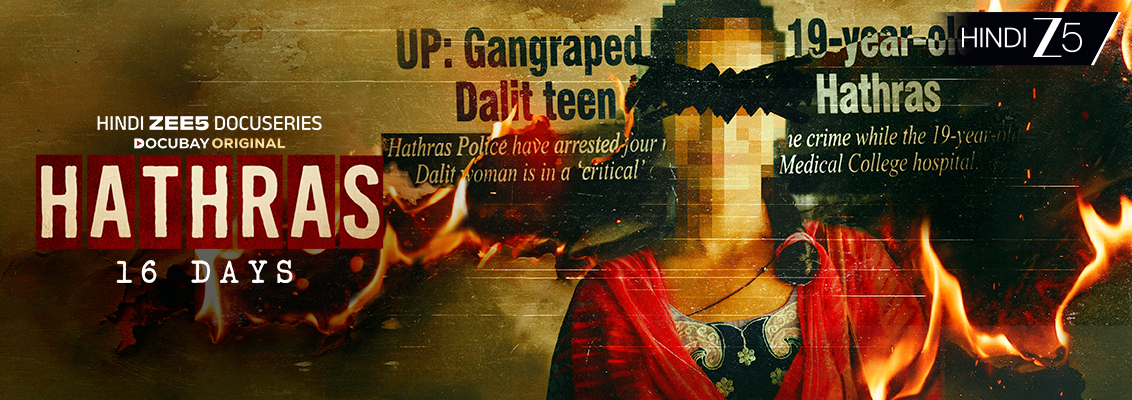
Some tragedies end when the cameras leave. Others begin there.
Years after the Hathras 16 Days Case first shook India, the headlines may have faded, but the aftermath never truly disappeared for the people forced to live inside it. Behind the outrage, television debates and political statements were real individuals whose lives changed dramatically and permanently: a grieving family still reeling from unimaginable loss, journalists marked by the stories they covered, and officials whose decisions remain under scrutiny even today.
That lingering emotional weight forms the core of ZEE5’s Hathras 16 Days documentary series, a deeply layered crime documentary that examines not only the incident itself but also what happened after the nation stopped paying daily attention.
Because while public outrage eventually moved on, the consequences did not.
This powerful OTT documentary revisits the people left behind by the controversy and asks a difficult question: what does justice actually look like once the spotlight disappears?
Why the Hathras 16 Days Case Aftermath Still Matters Today
The aftermath of the Hathras 16 Days case continues to provoke debate because the emotional and institutional consequences of the incident remain unresolved for many people.
The victim’s family became a symbol within a nationwide political and media battle. Journalists who investigated the case faced extraordinary public scrutiny. Authorities involved in handling the situation remain tied to decisions that have divided public opinion across India.
The ZEE5 thriller docuseries explores how each group carried the burden of the case long after the initial news cycle ended.
Rather than focusing solely on legal developments, the series examines the emotional fallout, social pressure, and psychological consequences of becoming part of one of India’s most controversial modern tragedies.
The Victim’s Family and the Emotional Cost of Public Trauma
At the centre of the Hathras 16 Days documentary series is the family whose grief has become a national spectacle.
The documentary carefully revisits the emotional devastation caused not only by the crime itself but also by everything that followed: media crowds outside their home, political visits, protests and the deeply controversial late-night cremation that intensified public outrage.
The series avoids sensationalism during these moments. Instead, it focuses on silence, exhaustion and the painful reality of mourning under constant public attention.
Actress Anjali Sivaraman, portraying the journalist inspired by Tanushree Pandey, becomes a crucial bridge between audiences and the victim’s family. Through her investigation, viewers witness how journalists often struggle to balance truth-seeking with emotional sensitivity while covering traumatic stories.
This emotional grounding helps the criminal documentary feel human rather than exploitative.
Where the Journalists Covering Hathras 16 Days Stand Today
One of the most compelling aspects of the Hathras 16 Days Case Aftermath is the impact the story had on journalists themselves.
The series explores how reporting on the Hathras 16 Days became both professionally and emotionally draining for many media figures. Some faced criticism from political groups. Others were accused of bias depending on how they covered developments surrounding the investigation.
In the crime documentary, Anjali Sivaraman’s character reflects the emotional fatigue reporters experience as they pursue the truth while navigating national outrage and institutional resistance.
Meanwhile, Pavail Gulati portrays a television media figure navigating the increasingly chaotic landscape of breaking news culture. His role highlights how modern journalism often exists in tension between investigation and performance.
Through these layered portrayals, the OTT documentary shows how journalists covering traumatic cases often change as a result of the stories they pursue.
Officials, Institutions and the Questions That Never Fully Disappeared
The Hathras 16 Days documentary series also revisits the role of officials and institutions whose actions became central to public debate.
Questions surrounding the handling of the investigation, communication with media outlets and the controversial cremation continue shaping discussions around the case even years later.
Veteran actor Kumud Mishra portrays a senior administrative figure whose character reflects the pressure authorities face as they attempt to manage escalating public outrage while defending institutional decisions.
Rather than presenting simplistic conclusions, the thriller docuseries explores how bureaucracy, politics and public trust collided in ways that still feel deeply relevant today.
This complexity is one reason many viewers are describing the series as more than a standard criminal documentary. It functions equally as a study of systems under pressure.
Why the Hathras 16 Days Documentary Series Feels Relevant in the OTT Era
Streaming audiences increasingly seek long-form investigative storytelling because traditional headlines rarely provide emotional or political depth.
That shift explains why the best documentaries on OTT platforms continue attracting strong interest, especially among younger viewers who want context rather than quick conclusions.
The Hathras 16 Days documentary series succeeds because it explores the aftermath instead of stopping at outrage. It asks what happens after public attention fades:
- Do families receive closure?
- Do institutions rebuild trust?
- Do journalists emotionally recover from what they witness?
- Does society actually learn anything from tragedy?
These are the uncomfortable questions driving the OTT documentary forward.
The Lasting Legacy of the Hathras 16 Days Case
The Hathras 16 Days Case Aftermath remains emotionally unresolved for many people because the story symbolised broader fears surrounding caste inequality, institutional accountability and media trust in India.
The ZEE5 series understands that the aftermath matters just as much as the crime itself.
By revisiting the lives of those affected years later, the documentary forces audiences to confront a reality often ignored once public outrage fades: that for the people at the centre of national tragedies, life does not simply return to normal.
This emotional honesty is what elevates crime documentaries beyond conventional true-crime storytelling.
Where to Watch the Hathras 16 Days Documentary Series
The Hathras 16 Days documentary series is streaming exclusively on ZEE5.
If you are interested in investigative storytelling, socially relevant criminal documentaries and emotionally layered thriller docuseries, this series offers one of the most powerful viewing experiences currently available on streaming platforms.
Subscribe to ZEE5 today to watch Hathras 16 Days and discover more of the best documentaries on OTT, including gripping original films, true-story investigations and socially driven series.
FAQs
What does the Hathras 16 Days documentary series reveal about the aftermath of the case?
The Hathras 16 Days documentary series explores how the incident continued to affect the victim’s family, journalists, and officials long after public attention faded. It examines emotional trauma, media pressure, institutional scrutiny and the lasting social impact of the controversy.
Why are viewers interested in the Hathras 16 Days Case Aftermath years later?
Many people remain interested in the Hathras 16 Days Case Aftermath because the case raised broader questions about caste, justice, media influence, and institutional accountability in India. The emotional and political debates surrounding the incident never fully disappeared, making the story feel relevant even today.
Is the Hathras 16 Days documentary series only about the crime itself?
No. While the crime documentary revisits the original incident, it focuses heavily on the aftermath, including public outrage, media narratives, journalists’ experiences, and the continuing emotional burden carried by those involved in the case.