





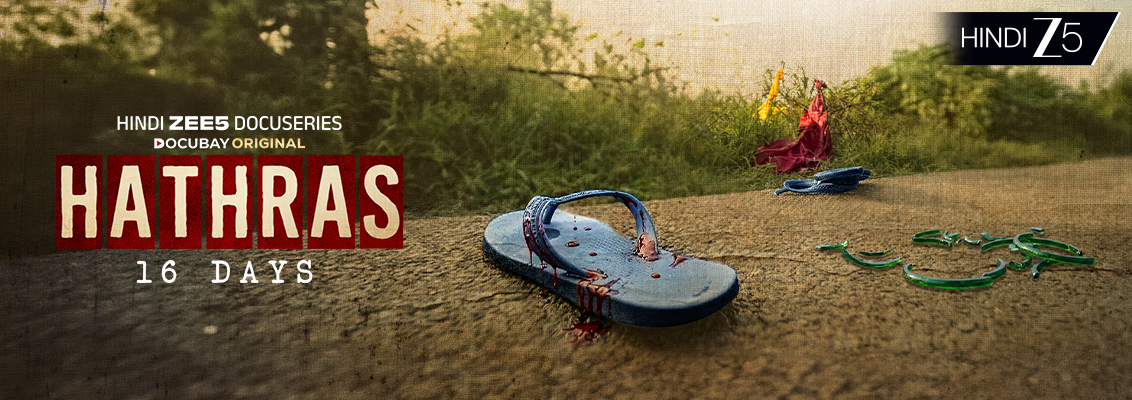
There are some stories India never truly moves on from. Not because the headlines continue, but because the silence that follows feels louder than the outrage itself.
The Hathras 16 Days Case was one of those stories.
For weeks in 2020, the country watched horror unfold in real time, a young Dalit woman assaulted, a grieving family pleading for justice, political blame games dominating television screens, and a midnight cremation that left millions questioning whether truth itself had been buried alongside her. Years later, the anger surrounding the case still lingers. Not because people forgot what happened, but because many feel the country never fully confronted what it revealed.
Now, ZEE5’s Hathras 16 Days documentary series revisits the incident through a gripping investigative lens, turning one of India’s most disturbing modern tragedies into a hard-hitting crime documentary that forces audiences to revisit uncomfortable questions. The series is not designed for easy viewing. It is an OTT documentary that examines caste, power, media narratives and institutional failure with unsettling honesty.
What makes this thriller docuseries stand apart is its refusal to present a single neat version of events. Instead, it explores how multiple narratives emerged around the same crime, from police statements and political commentary to journalists risking backlash in pursuit of the truth.
What Is the Hathras 16 Days Documentary Series About?
The Hathras 16 Days documentary series centres on the 2020 Hathras 16 Days incident in Uttar Pradesh, where a young Dalit woman suffered brutal sexual violence and later died from her injuries. However, the series goes beyond the crime itself.
It investigates the aftermath.
As protests erupted across India, journalists descended on the Hathras 16 Days village, attempting to separate fact from political spin. At the centre of this storm is journalist Tanushree Pandey, portrayed in the series as one of the few reporters who are unwilling to accept official narratives without scrutiny. Through recreated sequences, interviews and investigative storytelling, the series shows how national media allegedly controlled, redirected and debated information.
Rather than functioning like a conventional criminal documentary, the show becomes an examination of how modern India processes tragedy in the age of nonstop news cycles and social media outrage.
Why the Hathras 16 Days Case Still Matters in India Today
The Hathras 16 Days Case continues to resonate because it exposed far more than a single horrific crime. It forced India to confront difficult conversations around caste discrimination, gender violence, institutional accountability and media ethics.
The late-night cremation remains one of the most haunting moments the documentary revisits. The victim’s family repeatedly claimed that authorities denied them the opportunity to perform final rites before carrying out the cremation under police supervision. That imagery, flames in the darkness, barricades, and helplessness, became symbolic of public distrust.
This is where the ZEE5 series becomes particularly relevant today. Audiences are no longer satisfied with official statements alone. Viewers increasingly turn to the best documentaries on OTT platforms for context, investigation, and perspectives that traditional debates often lack.
The series asks a difficult but necessary question:
When institutions come under scrutiny, who decides what truth looks like?
Cast: Bringing the Hathras 16 Days Story to the Screen
One of the strongest aspects of the Hathras 16 Days documentary series is the grounded performances by its ensemble cast, many of whom portray figures inspired by real individuals involved in the case’s aftermath.
Actress Anjali Sivaraman reportedly plays an investigative journalist inspired by Tanushree Pandey, capturing the emotional burden reporters face while covering traumatic stories amid political pressure and public scrutiny.
Meanwhile, Pavail Gulati appears as a conflicted media figure navigating the chaotic ecosystem of breaking news television, where speed often overtakes sensitivity. His role reflects the crime documentary’s critique of sensationalism in modern media culture.
Veteran actor Kumud Mishra portrays an administrative authority figure whose actions raise uncomfortable questions around institutional accountability and procedural ethics throughout the investigation.
The supporting cast further strengthens the realism of the OTT documentary, presenting journalists, police personnel, political voices and villagers not as caricatures, but as people caught within a deeply fractured system.
How the Series Balances Investigation and Emotion
Unlike many sensationalised true-crime adaptations, the Hathras 16 Days documentary series relies more on atmosphere than on graphic exploitation.
The pacing is intentionally restless during newsroom sequences, as cameras move rapidly through protests, press gatherings, and chaotic television studios. These scenes reflect how quickly narratives around the Hathras 16 Days Case shifted in public discourse.
However, the recreated moments involving the victim’s family are filmed with restraint and sensitivity. The series repeatedly returns to the emotional devastation experienced by those left behind, reminding audiences that beneath every political argument was a real family dealing with unimaginable grief.
This balance is what elevates the show beyond a standard thriller docuseries. It becomes an exploration of memory, trauma and the consequences of turning tragedy into a national spectacle.
Why Audiences Are Calling It One of the Best Documentaries on OTT
The rise of investigative storytelling on streaming platforms has dramatically changed audience expectations. Viewers increasingly want layered narratives rather than simplified crime retellings.
That is precisely why many are already placing Hathras 16 Days among the best documentaries discussed online. The series does not merely ask what happened. It examines why people continue arguing about it years later.
The documentary also arrives at a time when public trust in institutions and mainstream narratives feels increasingly fragile. In that sense, the series speaks not only about Hathras 16 Days but also about contemporary India itself.
For younger audiences, especially those who may only vaguely remember the 2020 headlines, this criminal documentary serves as both an investigation and a historical reminder.
The Media Storm That Changed Public Perception
One of the most compelling elements explored in the Hathras 16 Days documentary series is how media coverage itself became part of the story.
Television debates turned explosive. Political representatives framed competing narratives. Social media amplified outrage while misinformation spread rapidly. Journalists covering the village faced restrictions, criticism and intense public attention.
Throughout the series, Anjali Sivaraman’s portrayal of the journalist figure shows the emotional exhaustion of pursuing truth in an environment where every statement becomes politicised. At the same time, Pavail Gulati’s character represents the growing tension between journalism and performance-driven news culture.
This layered depiction ensures the OTT documentary never feels one-dimensional. Instead, it captures how modern tragedies are shaped by both events and the stories constructed around them.
Where to Watch the Hathras 16 Days Documentary Series
The Hathras 16 Days documentary series is now streaming exclusively on ZEE5.
If you are interested in investigative storytelling, socially relevant crime documentaries and emotionally intense thriller docuseries, this is one of the most talked-about releases currently available on streaming.
Subscribe to ZEE5 today to watch Hathras 16 Days and discover the best documentaries on OTT, along with gripping original films, series and true-story investigations.
FAQs
Why is the Hathras 16 Days Case still relevant in India today?
The Hathras 16 Days Case remains relevant because it highlighted larger systemic issues involving caste discrimination, violence against women, media influence and institutional accountability. Even years later, many people feel that justice and transparency remain emotionally unresolved, which is why documentaries and investigations into the case continue to attract public attention.
Is the Hathras 16 Days documentary series based on true events?
Yes, the Hathras 16 Days documentary series draws inspiration from the real 2020 Hathras 16 Days incident and the events that followed. While some scenes recreate events for storytelling purposes, the series draws heavily from documented reports, media coverage, investigations, and public discourse surrounding the case.
Why are crime documentaries and thriller docuseries becoming so popular on OTT platforms?
Audiences increasingly prefer crime documentaries and thriller docuseries because they offer more profound context and investigative detail than traditional news formats. OTT platforms allow creators to explore complex real-life events with more nuance, making viewers feel more informed and emotionally connected to the story.


