





Some stories do not disappear because the facts become clear. They disappear because the noise around them becomes impossible to untangle.
The Hathras 16 Days Case was one of those stories.
At first, the nation saw outrage. Then came televised arguments, political accusations, protests, contradictory statements, and endless debates that made it hard to tell the difference between truth and narrative. But beneath the headlines, many people felt uneasy, sensing that the public never fully understood the details.
That uncertainty is exactly what ZEE5’s Hathras 16 Days documentary series confronts.
This gripping crime documentary revisits one of India’s most disturbing modern tragedies while exploring the hidden layers surrounding the investigation, media coverage and institutional response. More importantly, it examines how competing versions of the same incident shaped public perception nationwide.
Unlike a conventional criminal documentary, the series does not simply retell known events. It explores the details, silences, and unanswered questions that continued to haunt the Hathras 16 Days Case long after television cameras moved on.
The Hidden Questions Behind the Hathras 16 Days Case
The Hathras 16 Days Case became national news in 2020 after a young Dalit woman from Uttar Pradesh died following a brutal assault. However, as investigations progressed, the story rapidly evolved beyond the crime itself.
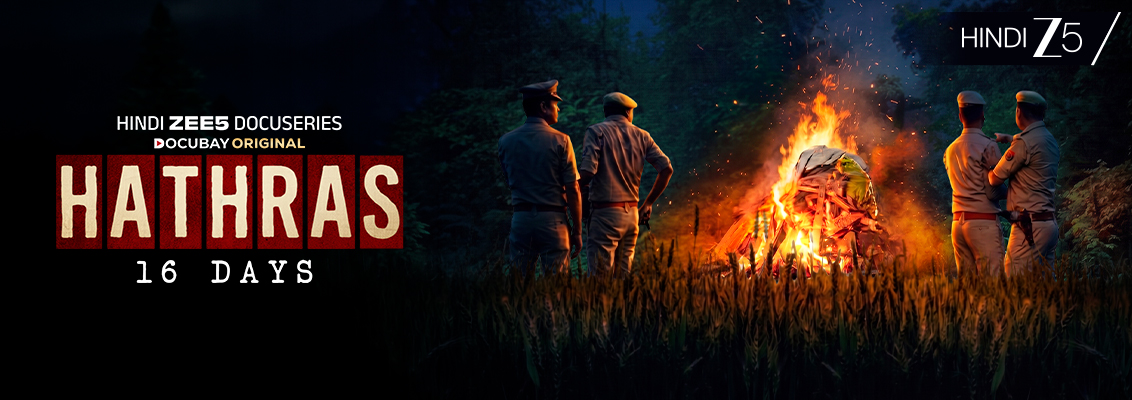
Questions emerged about delayed responses, conflicting statements, and how the authorities communicated information about the case to the public. The late-night cremation, which police supervised, intensified nationwide anger and fuelled suspicions that crucial details were being managed rather than clarified.
The ZEE5 OTT documentary revisits these moments through investigative storytelling and recreated sequences designed to expose the complexity behind the headlines.
Rather than claiming to provide absolute answers, the thriller docuseries focuses on the contradictions:
- Why did narratives keep changing?
- Why did public distrust grow so rapidly?
- And how did media coverage itself become part of the controversy?
How the Hathras 16 Days Documentary Series Explores Untold Perspectives
The Hathras 16 Days documentary series stands out from many other true-crime productions due to its layered perspective.
The series repeatedly examines how different groups experienced the same event differently, with authorities, journalists, political voices, activists and the victim’s family all interpreting reality through conflicting lenses.
Actress Anjali Sivaraman portrays the investigative journalist inspired by Tanushree Pandey, whose pursuit of uncomfortable truths becomes central to the narrative. Her performance captures the emotional burden reporters face as they investigate sensitive cases under public pressure and institutional barriers.
Meanwhile, Pavail Gulati appears as a media professional navigating the increasingly chaotic television landscape surrounding the Hathras 16 Days Case. Through his character, the crime documentary examines how news culture sometimes prioritises speed, spectacle and ideological positioning over clarity.
The Details of the News Cycle Moved Past Too Quickly
One of the strongest aspects of the criminal documentary is its focus on the aftermath rather than only on the incident itself.
The series explores:
- The media frenzy surrounding Hathras 16 Days village
- Questions around institution documentary is its focus on the aftermath rather than just reactions across political and social groups
- Allegations of narrative suppression
- The emotional toll on journalists and grieving relatives
Veteran actor Kumud Mishra portrays an administrative figure whose role reflects the uneasy relationship between governance, accountability and crisis management. His character becomes particularly important during sequences surrounding official communication and public outrage.
The documentary also revisits how quickly discussions around caste discrimination became politically charged. As debates intensified, many viewers struggled to distinguish verified facts from opinion-driven narratives.
That lingering uncertainty is precisely what continues to make the Hathras 16 Days Case emotionally unresolved for many people today.
Why Audiences Are Drawn to Crime Documentaries Like Hathras 16 Days
Streaming audiences increasingly seek investigative storytelling that goes deeper than traditional news reports. They want context, emotional truth and nuanced examination rather than simplified conclusions.
That shift explains why the best documentaries on OTT platforms continue generating strong interest, particularly among younger viewers who consume information through long-form storytelling rather than nightly television debates.
The Hathras 16 Days documentary series succeeds because it understands that audiences are not only interested in what happened. They are equally interested in how the public were told to interpret what happened.
This transforms the series from a standard thriller docuseries into a broader commentary on trust, media and institutional credibility in modern India.
The Emotional Core of the Hathras 16 Days Documentary Series
Despite its investigative structure, the OTT documentary never loses sight of the human tragedy at its centre.
The recreated family sequences are restrained and emotionally grounded, avoiding sensationalism while still conveying the devastation experienced by those left behind. The documentary repeatedly returns to themes of grief, helplessness and dignity denied.
Anjali Sivaraman’s portrayal of the journalist becomes particularly compelling in these moments, showing how prolonged exposure to traumatic stories affects reporters emotionally and professionally.
At the same time, Pavail Gulati’s media-focused character reflects the growing conflict between journalism driven by truth and television ecosystems shaped by performance and outrage.
Together, these performances help the crime documentary feel urgent, intimate and deeply unsettling.
Why the Hathras 16 Days Case Still Sparks Debate Today
Years after the incident, the Hathras 16 Days Case continues to generate public discussion because it symbolised more than one crime. It became a reflection of broader anxieties around caste inequality, institutional transparency and media trust in India.
The ZEE5 series revisits these themes without pretending the discomfort has disappeared.
Instead, it asks whether the country truly processed what happened or simply moved on once the news cycle shifted elsewhere.
That emotional honesty is why many viewers are already discussing the series as one of the best documentaries on OTT. It is not easy viewing, but it is undeniably difficult to ignore.
Where to Watch the Hathras 16 Days Documentary Series
The Hathras 16 Days documentary series is now streaming exclusively on ZEE5.
If you are interested in investigative storytelling, socially driven criminal documentaries and powerful thriller docuseries, this series offers one of the most talked-about viewing experiences currently available on streaming platforms.
Subscribe to ZEE5 today to watch Hathras 16 Days and explore the best documentaries on OTT, including gripping original films, true-story investigations, and impactful series inspired by real events.
FAQs
What hidden details does the Hathras 16 Days documentary series explore?
The Hathras 16 Days documentary series explores several lesser-discussed aspects of the case, including conflicting narratives, media influence, institutional responses and public distrust surrounding the investigation. Rather than focusing only on the crime itself, the series examines how information and perception evolved throughout the controversy.
Is the Hathras 16 Days documentary series based entirely on real events?
The series draws inspiration from real events connected to the 2020 Hathras 16 Days Case. While some scenes are dramatised for storytelling purposes, the documentary draws heavily from public reports, media coverage, investigative journalism and widely discussed developments related to the incident.
Why do viewers connect strongly with thriller docuseries based on true events?
Audiences often connect with thriller docuseries because real-life stories feel emotionally immediate and socially relevant. Unlike fictional crime dramas, investigative OTT documentaries allow viewers to explore unresolved questions, institutional complexities, and human experiences that continue to affect society beyond the screen.


