




Every four years, the world hits pause, and football takes over. Suddenly, billions of us- whether we’re waking up in São Paulo, staying up late in Seoul, or catching the game in Mumbai or Mexico City – start planning our entire lives around kick-off times.
But 2026 is not just another edition. What begins at the Estadio Azteca on June 12 will be unlike anything the tournament has produced in its 96-year history – bigger in scale, broader in reach, and richer in story than any version that came before it.
Here is why this one is genuinely different.
For the First Time in 28 Years, FIFA 2026™ has More Teams
The last time the FIFA World Cup expanded its field, it was 1998. France hosted a 32-team tournament for the first time, and the world watched as Zinedine Zidane headed in two goals in the final. Now, after 28 years, 2026 breaks it.
For the first time since that summer in Paris, the number of competing nations is going up – from 32 to 48. This is not a small adjustment. Asia gets eight automatic spots instead of four. Africa goes from five to nine. Smaller confederations across North America, the Caribbean and Oceania also see their allocations grow.
Personally, this is the part that excites me most. Think about the players you have watched week after week in the Premier League, La Liga or the Champions League – players from nations that have historically struggled to qualify for the World Cup. Many of them have spent their entire club careers without ever getting to wear their national jersey on football’s biggest stage. 2026 changes that. Players you know only as club footballers will finally get to represent their countries. That is not a small thing. For them and for their nations, it will be everything.
Three Nations, One Tournament
No Football World Cup has ever been shared across three countries. Not once, in 96 years of the FIFA tournament’s history. That changes that too.
The United States, Mexico and Canada will jointly host – a tri-nation partnership that has never been attempted at this scale in men’s football. Matches will be played from Vancouver in the north to Mexico City in the south, crossing time zones, languages and football cultures within a single tournament. Mexico becomes the first nation in history to host World Cup matches across three separate editions – 1970, 1986 and now 2026. Canada steps onto the global stage as a men’s World Cup host for the very first time.
For Indian fans watching on Zee5, this geography has a practical dimension: matches will kick off at all hours, from late nights to early mornings IST, because the stadiums stretch across an entire continent.
Historic Grounds and Architectural Marvels
The venues themselves span the full range of what a football stadium can be. At one end stands the Estadio Azteca – the only ground in the world to have hosted two World Cup finals (1970 and 1986), now opening a third tournament. Pelé played here. Maradona’s Hand of God happened here. It is a cathedral of the game, and on June 12 it will again be the centre of the footballing universe.
At the other end, venues like SoFi Stadium in Los Angeles and MetLife Stadium in New Jersey are modern architectural marvels – sleek, vast, purpose-built for spectacle, with capacities exceeding 70,000. The final will be played at MetLife, in front of a crowd over 80,000. Between these two extremes lie grounds spread across Dallas, Miami, Seattle, Atlanta, Houston, Philadelphia, Boston, Kansas City, San Francisco, Toronto, and Vancouver – each city bringing its own identity to the tournament.
A Record 104 Matches
More teams mean a lot more football, and the sheer scale of what’s coming is staggering. We’re talking 104 matches over 39 days, a huge leap from the 64 games in Qatar. With a new Round of 32 knockout stage, the underdog story suddenly has a lot more room to breathe.
There’s no point in pretending this is anything less than thrilling. It’s more FIFA drama and more of those late-night moments that keep you awake at 2 AM, totally captivated by two teams you’d never given a second thought to before kickoff. The greatest tournaments aren’t defined by the favourites; they’re defined by the surprises. In 2026, we’re simply clearing the way for more of those surprises to happen.
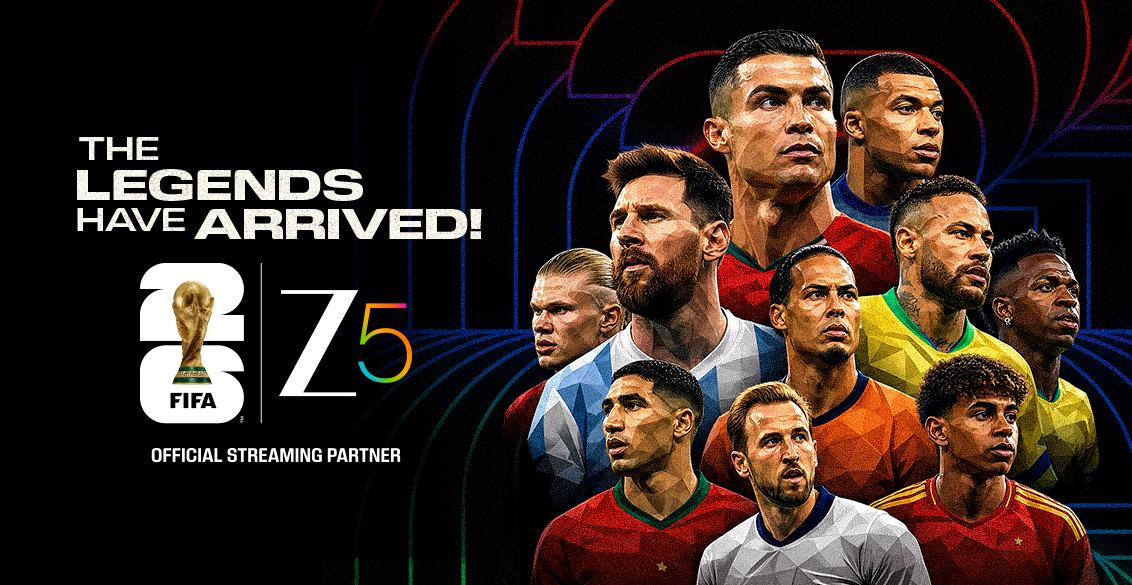
The biggest FIFA World Cup 2026™ in history starts on June 12 at 12:30 AM. Watch every match – all 104 of them – live on Zee5. You can buy FIFA Subscription pack here.


