





Some images disappear from television screens within hours. Others stay burnt into public memory long after the debates end.
The flames from Hathras 16 Days were one of those images.
In the middle of the night, under heavy police presence and away from grieving relatives, the body of a young Dalit woman was cremated in Uttar Pradesh while her family reportedly pleaded for one final goodbye. That moment transformed the Hathras 16 Days Forced Cremation from a criminal investigation into something far bigger, a national question about dignity, power and whether the truth was being controlled before the country’s eyes.
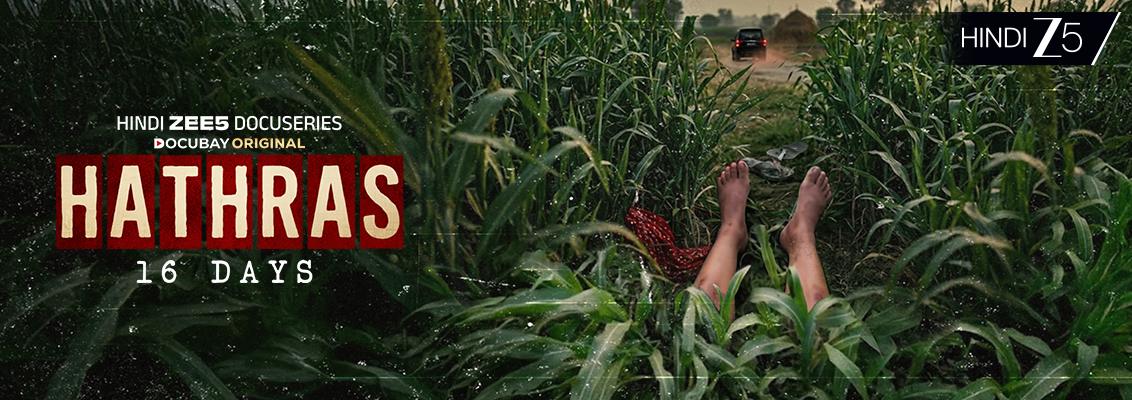
Years later, the incident still provokes anger, disbelief and unanswered questions. Now, ZEE5’s Hathras 16 Days documentary revisits that night through an emotionally charged crime film that examines what happened, why it happened, and why so many people still feel unsettled by it.
Far more than a conventional criminal documentary, the series explores the collision between politics, media narratives and public outrage. It asks viewers to revisit one of modern India’s most haunting controversies without offering easy answers.
What Happened During the Hathras 16 Days Forced Cremation?
The 16-day forced cremation in Hathras became one of the most controversial aspects of the entire case. Following the victim’s death in September 2020, authorities carried out her cremation late at night while family members alleged they were denied the opportunity to participate in the final rites.
Those images spread rapidly across news channels and social media.
Questions immediately followed:
Why was the cremation conducted in such secrecy?
Why were the victim’s relatives reportedly restricted?
Who authorised the decision?
And why did official statements appear inconsistent in the hours afterwards?
The ZEE5 OTT documentary revisits these unanswered questions through investigative storytelling, recreated moments and journalist testimonies that reconstruct the chaos surrounding that night.
Why the Hathras 16 Days Documentary Series Feels So Disturbingly Relevant
The Hathras 16 Days documentary series arrives at a time when public trust in official narratives feels increasingly fragile. Audiences today are more sceptical, more digitally aware and more willing to question institutional versions of events.
That is precisely why the series resonates beyond the original incident itself.
Rather than simply recounting headlines, this thriller docuseries explores how narratives are built, challenged and weaponised. It examines how political alignments influenced media coverage, how social media intensified outrage and how journalists attempting to uncover facts often became part of the story themselves.
Actress Anjali Sivaraman plays the journalist inspired by reporter Tanushree Pandey, whose investigation becomes central to the narrative. Her portrayal captures the emotional and professional toll of pursuing uncomfortable truths while navigating public pressure and institutional resistance.
The Emotional Weight Behind the Crime Documentary
One of the most unsettling elements of the crime documentary is its refusal to sensationalise trauma.
Instead of relying solely on shock value, the series repeatedly returns to the emotional devastation experienced by the victim’s family. Through restrained recreations and intimate storytelling, the film reminds viewers that beneath every political debate lay a grieving household trying to process unimaginable loss.
Actor Kumud Mishra portrays a senior administrative figure whose role reflects the growing tension between governance, public image management and accountability during the crisis. His performance adds complexity to the criminal documentary, refusing to reduce authority figures to simplistic villains.
The visual language of the series is equally powerful. Protest sequences feel chaotic and restless, while the camera films the scenes surrounding the cremation with haunting stillness. This contrast reinforces the central question that haunts the series:
Was the country witnessing institutional procedure or institutional suppression?
How Media Coverage Changed the Hathras 16 Days Story Forever
The Hathras 16 Days Forced Cremation quickly became more than a regional tragedy. It turned into a nationwide media storm.
Television debates intensified nightly. Political representatives issued conflicting claims. Protesters gathered across cities. Journalists entered the village to verify details, only to become targets of scrutiny themselves.
Within the series, Pavail Gulati plays a media professional navigating this increasingly volatile ecosystem. His character reflects the growing divide between journalism focused on truth and a news culture driven by spectacle.
This layered approach helps the OTT documentary stand apart from many sensationalised true-crime adaptations. Instead of focusing only on the brutality of the crime, the series interrogates how information itself became contested territory.
Why Viewers Are Calling It One of the Best Documentaries on OTT
Audiences today expect more from investigative storytelling. They no longer want simplified narratives that end neatly after a courtroom update or official statement.
That is why many viewers are already discussing Hathras 16 Days alongside the best documentaries on OTT. The series combines emotional storytelling with layered political and social commentary, creating a viewing experience that feels urgent rather than exploitative.
The documentary also explores broader themes that continue to affect Indian society today, such as caste inequality, institutional transparency, gender violence, and public distrust. These issues ensure the thriller docuseries feels relevant long after the final episode ends.
For younger audiences especially, the series acts as a reminder of how quickly national outrage can fade, even when emotional wounds remain unresolved.
The Questions That Still Refuse to Go Away
Years later, the Hathras 16 Days Forced Cremation continues generating difficult conversations because closure never fully arrived for many people watching the case unfold.
The ZEE5 series repeatedly returns to the symbolic power of that night:
A family are separated from their daughter.
Police barricades illuminated by firelight.
Television cameras capture confusion instead of clarity.
Those moments became larger than headlines. They became symbols of fear, helplessness and distrust.
By reopening these questions, the Hathras 16 Days documentary series challenges audiences to reconsider whether justice is only about legal outcomes or whether dignity, transparency and truth matter just as deeply.
Where to Watch the Hathras 16 Days Documentary Series
The Hathras 16 Days documentary series is streaming exclusively on ZEE5.
If you are interested in investigative storytelling, socially conscious crime documentaries and emotionally layered thriller docuseries, this is among the most talked-about releases currently available on streaming platforms.
Subscribe to ZEE5 today to watch Hathras 16 Days and explore more of the best documentaries on OTT, including gripping true-story investigations and powerful original series.
FAQs
Why did the Hathras 16 Days Forced Cremation become so controversial?
The Hathras 16 Days Forced Cremation became controversial because the victim’s family alleged they were not allowed to perform the final rites before authorities cremated her body late at night. The incident raised widespread questions about transparency, dignity and institutional accountability, making it one of the most discussed moments of the entire case.
Is the Hathras 16 Days documentary series completely based on real events?
The Hathras 16 Days documentary series is inspired by real-life events documented in the 2020 case. While certain scenes are dramatised for storytelling purposes, the series draws heavily on media reports, investigations, eyewitness accounts, and public discourse related to the incident.
Why are OTT documentaries about real crimes attracting more viewers today?
Viewers are increasingly turning to OTT documentaries and criminal documentaries because they offer deeper context than traditional news coverage. Audiences want investigative storytelling that explores the social, political, and emotional dimensions of real events, especially cases that continue to generate public debate years later.