





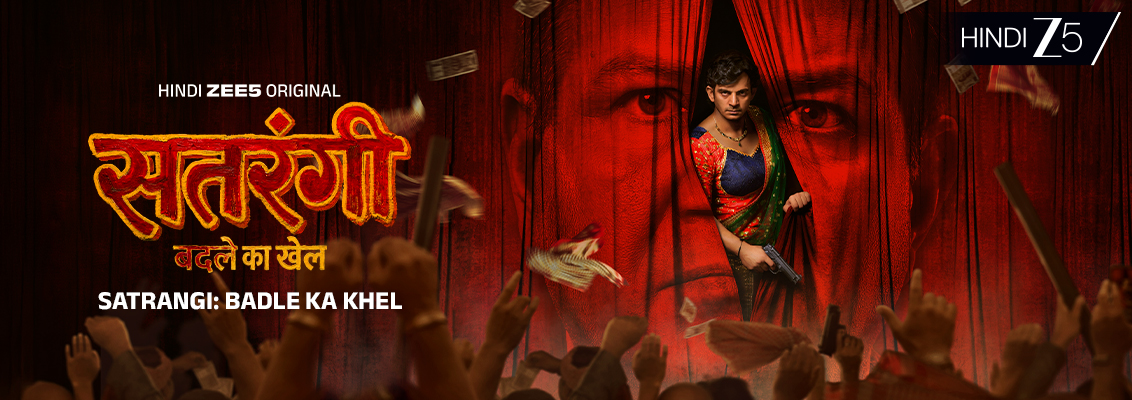
The unseen heroes of rural India’s entertainment landscape have preserved India’s folk traditions long before cinema, television, and OTT platforms became part of everyday life. In the villages of Bihar, Uttar Pradesh, Rajasthan, and many other regions, entertainment has always been found in folk songs, travelling performances, village theatre, and traditional dance forms performed under open skies.
Today, rooted Indian OTT storytelling finally gives these forgotten performers national attention.
With Satrangi: Badle Ka Khel, ZEE5 highlights one such neglected world: Launda Naach, a traditional folk art form from Bihar and eastern Uttar Pradesh. Premiering on May 22, 2026, Satrangi: Badle Ka Khel transforms the lives of folk performers into the emotional core of a Hindi-language crime thriller web series.
More than a revenge drama, Satrangi: Badle Ka Khel becomes a story about dignity, survival, caste discrimination, and the silent struggle of artists who continue performing despite social stigma and economic hardship.
Folk Artists: The Real Keepers of India’s Cultural Identity
The unseen heroes of rural India’s entertainment landscape are not celebrities or influencers. They are folk performers who keep India’s regional traditions alive through generations.
Across rural India, these artists continue to perform Bhojpuri folk theatre, village storytelling, devotional music, traditional dance forms, and regional performance arts.
Many of them balance their performances with other jobs as labourers, farmers, or daily wage workers. Despite limited recognition, they continue protecting local languages, cultural memory, and rural storytelling traditions.
Without these performers, several regional art forms would disappear completely. Folk performers like the ones shown in Satrangi: Badle Ka Khel carry generations of cultural history. Read our detailed blog on Launda Naach and its emotional significance in rural India.
Launda Naach: The Folk Art That Refused to Disappear
Launda Naach is one of the most important yet misunderstood traditions in the entertainment landscape of rural India.
Popular in Bihar and eastern Uttar Pradesh, Launda Naach is a traditional folk performance in which male artists dress as women and perform dances, songs, humour, satire, and emotional drama at weddings and village celebrations.
Historically, women were not allowed to perform publicly in many communities. This led male performers to take on female roles in folk performances.
The form later evolved into an important medium of social commentary through the work of Bhikhari Thakur, often called the Shakespeare of Bhojpuri.
His performances addressed caste oppression, migration, alcoholism, women’s struggles, and social inequality.
But despite its cultural value, Launda Naach performers continued facing mockery, exploitation, and social stigma. Bablu Mahto’s story reflects the emotional burden many real folk artists carry. Explore our blog on vengeance, grief, and vulnerability in Satrangi: Badle Ka Khel.
How Satrangi: Badle Ka Khel Humanises Launda Naach Performers
This is the context in which Satrangi: Badle Ka Khel becomes important.
The ZEE5 web series does not present Launda Naach as comic entertainment. Instead, it explores the emotional pain, dignity, and resilience behind the performance.
The Satrangi: Badle Ka Khel story follows Bablu Mahto, played by Anshuman Pushkar, whose father is murdered by the powerful Singh family. Forced to continue his father’s profession as a Launda Naach performer, Bablu enters a world filled with humiliation, social prejudice, and emotional trauma while secretly planning revenge.
Through Bablu’s journey, Satrangi: Badle Ka Khel transforms the lives of rural folk artists into the centre of a powerful Hindi crime thriller web series.
The series finally gives visibility to people who have remained invisible in mainstream entertainment for decades. Want to know how OTT platforms are helping forgotten art forms survive? Read our blog on regional narratives and cultural storytelling on ZEE5.
Satrangi: Badle Ka Khel Brings Together a Strong Cast and a Rooted Rural Story
Directed by Jai Basantu Singh, Satrangi: Badle Ka Khel is set to premiere on ZEE5 on May 22, 2026. The show features Anshuman Pushkar in the lead role as Bablu Mahto, alongside actors like Kumud Mishra, Aarti Singh, Mahavash, Kajal Chauhan, Pranjal Pateriya, Manu Bisht, Pankaj Jha, Yashpal Sharma, Sanjay Sonu, and Satyakam Anand.
What is most striking in the trailer is how naturally the cast fits into the series’ dusty rural world. Nobody looks polished or cinematic for the sake of it. The performances feel lived-in, emotionally restrained and rooted in the social reality the show seeks to portray. That realism gives Satrangi: Badle Ka Khel a texture unlike that of many mainstream Hindi OTT thrillers.
More Than Revenge, Satrangi: Badle Ka Khel Explores Pain, Identity, and Survival
While the series follows the structure of a revenge drama, Satrangi: Badle Ka Khel is not built like a typical crime-thriller web series, where violence alone drives the story forward. The emotional conflict inside Bablu becomes just as important as the external battle against the Singh family.
The series explores themes such as caste hierarchy, rural power structures, masculinity, emotional grief, humiliation, and identity without becoming preachy. Instead of creating an exaggerated hero, the story focuses on a man trying to survive emotionally while carrying the burden of family trauma and social stigma.
That emotional realism is what makes Satrangi: Badle Ka Khel stand out among Bihar-based web series and Hindi rural crime dramas. It feels less like a stylised thriller and more like a deeply human story that unfolds in a violent, unequal world.
The Real Struggle of Folk Artists in Rural India
Satrangi: Badle Ka Khel highlights the harsh reality behind rural entertainment and the lives of folk performers across Bihar and Uttar Pradesh. While audiences celebrate these artists during weddings and festivals, many performers continue struggling with financial insecurity, social stigma, and a lack of recognition.
For generations, folk artists have carried regional traditions through music, storytelling, satire, and dance performances, often without proper support or visibility. The series captures this emotional reality by showing how performers like Bablu are forced to balance survival with dignity in a society that enjoys their art but rarely respects the people behind it.
Through its rooted storytelling, Satrangi: Badle Ka Khel shines a light on the forgotten voices preserving India’s cultural heritage through performance.
How OTT Platforms Are Reviving Regional Folk Arts and Rural Stories
OTT platforms like ZEE5 are playing a major role in reviving regional storytelling and traditional Indian folk arts for modern audiences.
Over the years, many rural performance traditions remained limited to local communities. Today, Hindi-language web series, regional OTT originals, and rural crime dramas are helping these stories reach viewers across the country.
Satrangi: Badle Ka Khel stands out for not using Launda Naach as a background element. Instead, the series builds its emotional core around the lives of performers and the cultural world they belong to.
This shift in storytelling is helping audiences connect with Bihar-based web series, rural Hindi dramas, folk-inspired crime thrillers, and culturally rooted OTT content in a much more profound way than before.
Our blog on gender norms and identity in Satrangi: Badle Ka Khel explores the social stigma that Launda Naach performers face. If you enjoy emotionally layered web series and authentic Indian stories, your next binge-watch awaits on ZEE5. Subscribe today and explore a world of unforgettable entertainment.
How Satrangi: Badle Ka Khel Brings Folk Performers into Mainstream Conversations
For years, folk performers were viewed only as local entertainers performing on village stages. Satrangi: Badle Ka Khel changes that perception by presenting them as artists carrying generations of history, pain, resilience, and identity through their performances.
The series gives emotional depth to every costume, dance performance, and folk song by showing the human stories behind them. Instead of reducing Launda Naach performers to stereotypes, the show allows viewers to understand their emotional struggles and social realities.
By bringing these stories to a mainstream OTT audience, Satrangi: Badle Ka Khel helps transform forgotten folk traditions into important cultural conversations.
FAQs
What is Satrangi: Badle Ka Khel about?
Satrangi: Badle Ka Khel is a Hindi-language crime thriller web series on ZEE5 that follows Bablu Mahto, a Launda Naach performer, as he seeks revenge after his father is murdered by a powerful family in rural Uttar Pradesh.
What is Launda Naach?
Launda Naach is a traditional folk art form from Bihar and eastern Uttar Pradesh in which male performers dress as women and perform dance, songs, satire, and emotional theatre during village celebrations and weddings.
Why are folk performers called the unseen heroes of rural India’s entertainment landscape?
Folk performers preserve regional traditions, languages, storytelling, and cultural identity despite facing poverty, social stigma, and a lack of mainstream recognition. They continue to keep India’s rural entertainment traditions alive across generations.


