





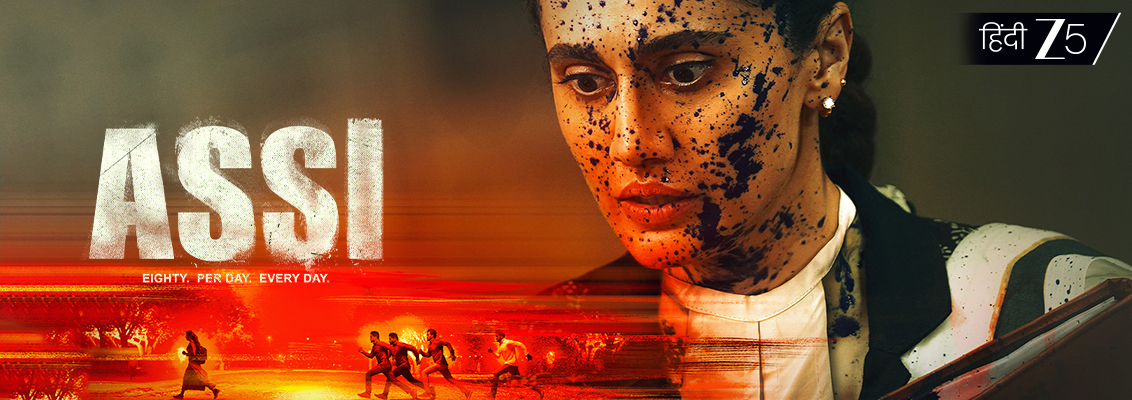
Assi (2026), directed by Anubhav Sinha, goes far beyond being just another courtroom drama based on a tragic crime. It analyses the unpleasant realities of our society and justice system, exposing the biases and failures that survivors often endure.
The title itself points to a disturbing reality: around 80 rapes are reported every day in India, but the film’s real impact arises from how it draws attention to the everyday normalisation of victim-blaming and firmly entrenched misogyny.
At the heart of the story is Parima, played by Kani Kusruti, whose fight for justice feels painfully real. Through her voyage, Assi doesn’t just tell a story. It forces us to face a harsh reality: in many cases, it’s not just the accused who are questioned, but the survivor who is put under scrutiny, both in society and inside the legal system.
The Weaponisation of Character
In the courtroom’s honoured halls, the film illustrates how a survivor’s history is weaponised against her. The defence lawyer, shown with cold pragmatism by Satyajit Sharma, doesn’t just argue the facts of the case; he attempts to dismantle Parima’s personhood.
The film illustrates several common victim-blaming tactics used to suggest complicity:
- The “Why” of Movement: Parima is questioned on why she was out late, why she chose a specific route, and why she was returning from a staff gathering as if a woman’s presence in public space is a conditional privilege rather than a right.
- The Inconsistency Trap: The legal system frequently demands “perfect” testimony from a person suffering from massive physical and psychological trauma. Assi shows how minor differences in Parima’s memory, caused by the very trauma she endured, are used to label her unreliable.
Institutional Indifference and Evidence Tampering
Misogyny in Assi isn’t just found in the words of the defence; it is baked into the bureaucracy. The film portrays a police force that is often indifferent or actively corrupt. We see:
- Half-hearted Paperwork: The initial investigation is marred by apathy, showing a system that views sexual violence as an “inevitability” rather than a crisis.
- Forensic Sabotage: The compromising of DNA evidence and witness intimidation showcases how the “boys’ club” within institutional ranks works to protect the status quo, making the road to justice an uphill battle before the trial even begins.
The Social Isolation of the Survivor
Anubhav Sinha masterfully shows that the legal system does not exist in a vacuum. The misogyny inside the court is powered by the judgment outside it. Assi depicts how Parima’s school distances itself to “avoid controversy,” and how neighbours gossip rather than offer support.
This “societal courtroom” is where the first verdict is usually passed. By showing the faltering support of acquaintances, the film exposes how, as a collective, we isolate victims to defend our own comfort, successfully silencing others who might wish to come forward.
The “Umbrella Man”: A Symptom of Failed Justice
One of the most striking elements of the film is the urban legend of the “Umbrella Man”, a vigilante collective that targets predators when the courts fail.
While the film eventually delivers a legal victory for Parima, it frames this win as “heavy and sombre” rather than celebratory. The existence of the Umbrella Man symbol serves as a damning indictment of the legal system. It suggests that the public has lost so much faith in the “due process”, a process frequently bogged down by misogynistic delays and victim-blaming, that they find more hope in a shadow form of community justice.
The Role of the Female Judge
In a perceptive yet powerful creative choice, the film features a stern female judge who presides over the case. Her presence endures a silent commentary on the misogyny embedded in legal procedure. She watches as the trial exposes the firmly rooted biases of the lawyers and the media.
Her final verdict in favour of Parima is a moment of judicial accountability, but as the film points out, it cannot reverse the harm. The verdict is a “fragile” victory that relies as much on public outrage as it does on the law, highlighting that the system only works when it is forced to by the sheer weight of external pressure.
A Call for Structural Reform
Assi (2026) is a difficult watch because it refuses to offer the easy catharsis of a typical “hero wins” story. Instead, it leaves the audience with the unpleasant fact that for every Parima who receives a verdict, there exist numerous others lost in a sea of tampered evidence and character assassination.
By exposing the mechanics of victim-blaming and institutional misogyny, Sinha’s film demands that we stop asking what the survivor was doing and start asking why the system is designed to let the guilty walk free. Justice, the film suggests, shouldn’t require a miracle or a vigilante; it should be the default.
Frequently Asked Questions
Q: Who is in the cast of the movie Assi?
A: The film features a powerhouse ensemble led by Taapsee Pannu as Advocate Raavi and Kani Kusruti as Parima. Other key cast members include:
- Mohammed Zeeshan Ayyub as Vinay
- Manoj Pahwa as Deepraj
- Kumud Mishra as Kartik
- Revathy as the Judge
- Special appearances by Naseeruddin Shah, Supriya Pathak, and Seema Pahwa.
Q: What is the meaning of the movie title “Assi”?
A: The title Assi (meaning “Eighty”) refers to the grim statistic that approximately 80 reported rapes occur every day in India. The film uses this number to highlight the ubiquitous nature of the issue.