





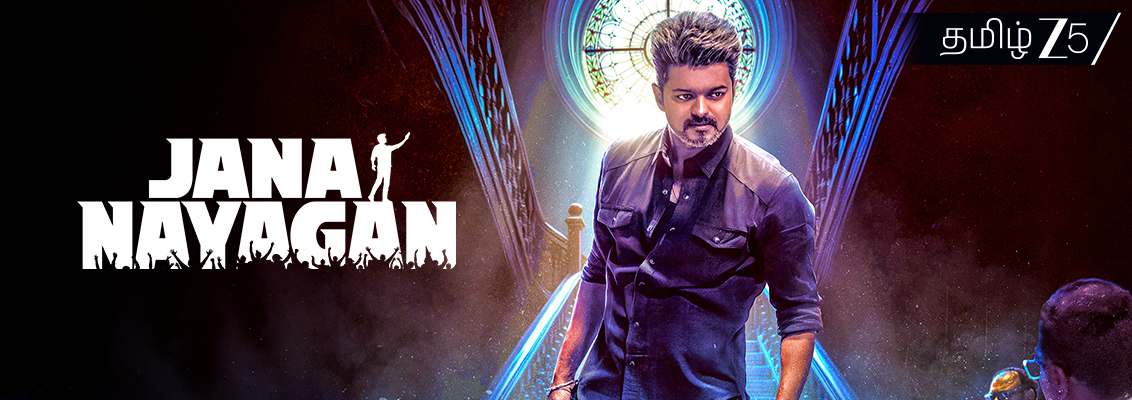
Same promise, different battle: Jana Nayagan and Bhagavanth Kesari both follow a powerful guardian helping a young woman overcome fear and pursue an Army career. Yet, the stories begin moving in different directions once their larger conflicts take control.
While Bhagavanth Kesari remains a family-driven commercial entertainer, Jana Nayagan turns the same emotional foundation into a Tamil action drama movie about political power, public leadership and social responsibility.
How Much Does Jana Nayagan Retain from Bhagavanth Kesari
The heart of both films is the relationship between a guardian and a young woman named Vijayalakshmi, affectionately called Viji or Vijji.
Bhagavanth Kesari becomes Vijji’s guardian after her father dies. He pushes her to become confident and fulfil her father’s dream of seeing her join the Indian Army.
Vetri takes on a similar responsibility in Jana Nayagan. He guides Viji through training, fear and self-doubt while encouraging her to build an independent future.
Bhagavanth Kesari director Anil Ravipudi described the Vijay film as retaining the basic soul of his story while changing several major elements. That shared soul is easy to recognise, but the surrounding worlds are not identical.
How Are the Stories Different
The biggest difference arrives when the personal conflict begins expanding.
Bhagavanth Kesari keeps its focus on Bhagavanth, Vijji and their connection with powerful businessman Rahul Sanghvi. Family emotion, a hidden past and women’s empowerment drive the narrative forward.
The Jana Nayagan story widens the conflict considerably. Vetri’s responsibility towards Viji brings him into a conspiracy involving international criminal John Himmler, political manipulation, misinformation and attempts to control people through fear.
Journalist Kayal also gives the story an investigative angle. Information and public awareness become important alongside physical action, making Vetri’s battle about society rather than one family alone.
How Do the Main Characters Compare
Familiar character functions return, but H. Vinoth reshapes them for Vijay and a politically charged setting.
| Jana Nayagan | Bhagavanth Kesari | Major Difference |
| Vijay as Vetri | Balakrishna as Bhagavanth | Vetri develops into a public leader, while Bhagavanth remains primarily a guardian and protector. |
| Mamitha Baiju as Viji | Sreeleela as Vijji | Both characters face fear and dream of joining the Army, but their relationships with their guardians have different emotional rhythms. |
| Bobby Deol as John Himmler | Arjun Rampal as Rahul Sanghvi | John represents a wider ideological and political danger, while Rahul is a ruthless business tycoon tied to Bhagavanth’s past. |
| Pooja Hegde as Kayal | Kajal Aggarwal as Kathyayani | Kayal contributes through journalism and investigation, while Kathyayani brings a lighter and more personal dynamic. |
| Large political ensemble | Family-centred supporting cast | Jana Nayagan adds more political, administrative and institutional characters. |
The actors also bring contrasting hero styles. Balakrishna makes Bhagavanth intense, forceful and openly commanding. Vijay gives Vetri greater warmth in personal moments before shifting into political and mass-hero authority.
How Does the Action Change
Both films understand the value of a hero entrance, but they build action around different kinds of power.
Bhagavanth Kesari uses traditional commercial set pieces, close combat and emotional confrontations designed around Balakrishna’s forceful screen presence. The action supports Bhagavanth’s role as a protector.
Jana Nayagan moves between hand-to-hand combat, gunfire, large groups and politically charged public spaces. The increasing scale reflects how Vetri’s personal responsibility becomes connected with a larger threat.
The music also changes the energy. Thaman S gives Bhagavanth Kesari a forceful Telugu mass-film rhythm, while Anirudh Ravichander uses electronic beats, folk percussion and character themes to amplify Vijay’s action and leadership moments.
Which Film Places More Focus on Women’s Empowerment
Bhagavanth Kesari makes women’s strength one of its clearest themes. Bhagavanth wants Vijji to face fear, understand personal safety and become capable of protecting herself.
Jana Nayagan retains that message through Vetri and Viji. He does not want her to remain dependent on him. His real goal is to help her develop the confidence and discipline needed to choose her own path.
However, Jana Nayagan connects her journey with a broader political idea. Viji’s personal fear reflects how powerful systems can make entire communities feel helpless. Her growth therefore supports the film’s larger message about refusing to be controlled.
What Is the Biggest Difference Between the Two Films
The clearest difference is political purpose.
Bhagavanth Kesari uses its guardian story to discuss women’s safety, courage, family responsibility and empowerment. It is primarily an emotional mass entertainer.
Jana Nayagan keeps those ideas but adds democracy, leadership, public trust, misinformation and the misuse of political influence. Vetri is presented not only as Viji’s protector but also as a figure capable of awakening courage among ordinary people.
Vijay’s move towards public life gives these scenes another layer. His dialogues and the initials of Thalapathy Vetri Kondan, TVK, make the political connection difficult to miss.
Is Jana Nayagan a Complete Remake
Jana Nayagan is a remake at its foundation, but it is not simply a scene-for-scene recreation.
The guardian relationship, Viji’s Army ambition, her battle with fear and the empowerment message clearly come from Bhagavanth Kesari. H. Vinoth then introduces a different villain, a larger political conspiracy, new supporting characters and a Vijay-centred leadership narrative.
Think of it as the same emotional engine placed inside a different vehicle. The connection is visible, but the destination changes.
Discover the Differences on Zee 5
Knowing the similarities makes H. Vinoth’s changes even more interesting. Head to Zee 5 and experience how Jana Nayagan transforms a guardian’s promise into a much larger fight involving fear, politics and public leadership.
Look beyond the shared foundation because Vetri’s world has ambitions of its own.
Frequently Asked Questions About Jana Nayagan and Bhagavanth Kesari
Q1. Is Jana Nayagan a remake of Bhagavanth Kesari?
Ans. Yes. It adapts the central guardian-and-protégé story while adding new political themes, characters and conflicts.
Q2. Are Viji and Vijji the same type of character?
Ans. Both are young women overcoming fear while preparing for an Army career, although their individual journeys and relationships differ.
Q3. Which film has a stronger political focus?
Ans. Jana Nayagan places greater emphasis on leadership, democracy, misinformation and public responsibility.
Q4. Can viewers understand Jana Nayagan without seeing Bhagavanth Kesari?
Ans. Yes. Jana Nayagan presents its story, characters and political world as a complete standalone experience.


