




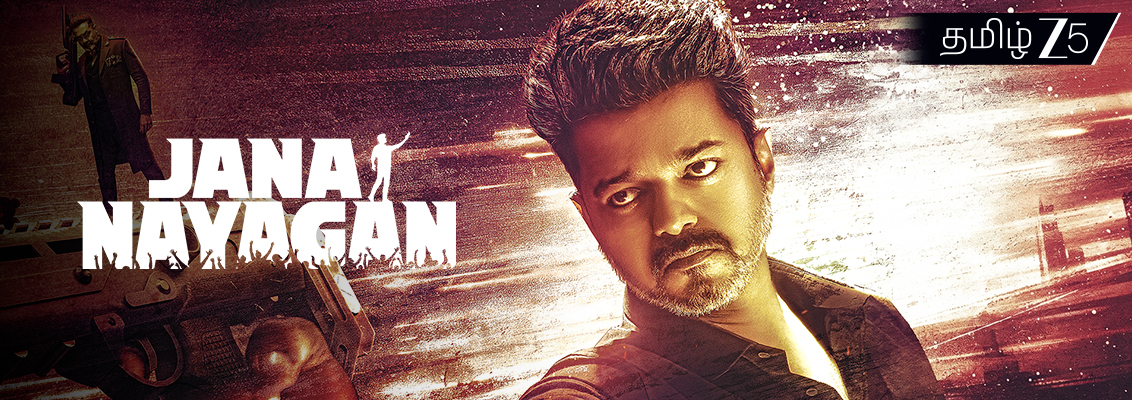
What separates a leader from someone who simply holds power? Jana Nayagan builds its political conflict around this question, placing Thalapathy Vijay’s Vetri between ordinary people and a system that survives through fear.
This Tamil political movie uses mass action and emotional drama to explore democracy, misinformation, women’s independence and public responsibility. The speeches may be direct, but the strongest messages emerge through the choices its characters make.
How Does Jana Nayagan Present Power
The most dangerous weapon in Jana Nayagan is not a gun. It is fear.
John Himmler and the political forces supporting him treat people as pieces in a calculated game. Violence creates panic, misinformation hides the truth and institutional influence prevents anyone from questioning those in control.
The film therefore presents power in two forms. One is built through authority, secrecy and intimidation. The other grows from trust, courage and public support. The entire conflict emerges from the collision between these two ideas.
What Kind of Leader Is Vetri
Vetri never needs a formal position to make people listen. His leadership begins with responsibility.
His relationship with Viji establishes this quality on a personal level. He does not simply protect her from danger. He encourages her to become confident, disciplined and capable of choosing her own future.
The same approach shapes his connection with the public. Vetri does not treat people as followers waiting to be rescued. He reminds them that they already possess the ability to question injustice and challenge fear.
That distinction turns him from a traditional action hero into the “People’s Leader” promised by the title.
Why Is Fear So Important to the Political Conflict
Fear works quietly until someone decides to challenge it. Jana Nayagan shows how fear can influence both individuals and entire communities.
For Viji, fear threatens her confidence and ambition. On a larger level, powerful groups use it to silence questions, create divisions and convince citizens that resistance is impossible.
Vetri fights this idea through physical action, but his larger battle is psychological. He wants people to stop seeing themselves as helpless. Once fear loses its control, the system built around it begins to look far less powerful.
What Does the Film Say About Truth and Misinformation
A controlled narrative can protect corruption almost as effectively as an army. That is why information becomes an important part of the conflict.
Pooja Hegde’s Kayal brings the perspective of a journalist who asks questions and looks beyond official explanations. Her role highlights how journalism can connect hidden events with the people affected by them.
The social message is clear: democracy cannot function when citizens receive only the version of truth preferred by those in authority. Questions, evidence and public awareness become necessary forms of resistance.
How Does Viji’s Journey Add a Social Message
The film’s politics become personal through Viji. Her dream of joining the Indian Army represents independence, purpose and the freedom to choose a path for herself.
Vetri’s support matters because he does not ask her to remain dependent on his protection. His training prepares her to face challenges with her own strength.
Through their bond, Jana Nayagan argues that empowerment is not about speaking on someone’s behalf forever. It is about helping that person develop the confidence to speak and act independently.
How Does Jana Nayagan Explore Unity and Division
Division becomes useful when power depends on keeping people suspicious of one another. John’s strategy draws strength from fear, manipulation and social tension.
Vetri represents the opposite idea. His influence comes from bringing people together around shared concerns rather than separating them through identity or anger.
The film uses crowds, public conversations and political confrontations to show that unity is not simply an emotional slogan. It can become a force capable of challenging organised power.
Why Does Vijay’s Political Avatar Feel So Significant
Vijay’s presence gives every political idea an additional layer. Audiences are not only seeing Vetri speak about public service. They are seeing an actor whose own journey has moved increasingly closer to active politics.
Even the name Thalapathy Vetri Kondan carries meaning. Its initials form TVK, connecting the fictional leader with Vijay’s political identity outside cinema.
- Vinoth uses that connection to create a character who combines familiar Vijay qualities such as action, emotion, humour and mass dialogue with a clear public-facing image. Vetri feels like both a cinematic hero and a bridge towards Vijay’s next chapter.
What Is the Central Political Message of Jana Nayagan
Strip away the action, and one idea remains: authority can be given, but leadership must be earned.
The film questions systems that use fear to maintain control and presents awareness as the first step towards resistance. It also argues that leaders should create confident citizens rather than permanent followers.
That is what makes Vetri important. His greatest strength is not that he can defeat powerful enemies. It is that he can make ordinary people recognise their own strength.
Step into Vetri’s Political World on Zee 5
The punches create the spectacle, but the ideas give every confrontation its purpose. Head to Zee 5 and experience how Jana Nayagan turns one man’s responsibility into a wider conversation about courage, truth and leadership.
Listen closely when Vetri speaks. His biggest challenge is not asking people to follow him but convincing them to stop following fear.
Frequently Asked Questions About Jana Nayagan’s Political Themes
Q1. What political issues does Jana Nayagan explore?
Ans. The film explores corruption, misinformation, public trust, democracy, fear-based control and the responsibilities of leadership.
Q2. Is Jana Nayagan based on a real political party?
Ans. No. The story is fictional, although its leadership themes and the initials of Vetri’s name connect with Vijay’s public journey.
Q3. What does Vetri represent in Jana Nayagan?
Ans. Vetri represents people-focused leadership built on trust, courage and responsibility rather than authority alone.
Q4. How do Kayal and Viji support the film’s social messages?
Ans. Kayal represents truth-seeking journalism, while Viji’s journey highlights independence, confidence and freedom of choice.


