




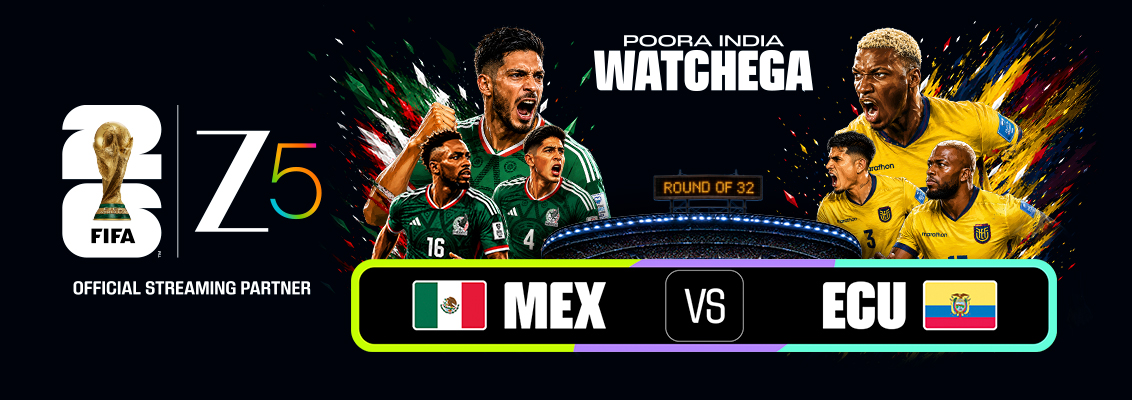
Round of 32 | Estadio Azteca, Mexico City | Tuesday, 1 July — 6:30 AM IST
How They Line Up
Mexico — 4-3-3
Javier Aguirre returns to the 4-3-3 that beat South Korea and managed Czechia on home soil. Rangel in goal behind a back four of Gallardo at right-back, Johan Vásquez and César Montes as the centre-back pairing — Montes anchors this defensive line, and his return from suspension has given the whole shape its settled look — and Reyes at left-back. Luis Romo, who scored the decisive goal against South Korea, slots into the midfield three alongside Lira and Gutiérrez. Romo breaks forward from deep, Lira provides the defensive screen in front of the centre-backs, Gutiérrez adds the vertical passes and covering runs between them. Julián Quiñones operates from the right, Roberto Alvarado on the left, and Raúl Jiménez leads the line through the middle. The shape is familiar, the roles are clear, and every man in it has played at least two matches at the Azteca in the last three weeks.
Ecuador — 4-4-2
Sebastián Beccacece reverts to the 4-4-2 he used against Ivory Coast and Germany — the structure in which Ecuador are most comfortable. Hernán Galíndez in goal. Franco at right-back, Willian Pacho and Ordóñez as the centre-back pairing, Piero Hincapié at left-back. Pacho — who has a back-to-back Champions League winner’s medal with PSG — is the defensive leader, reading the play before it develops and organising the line. John Yeboah occupies the right midfield channel, Vite and Moisés Caicedo form the central pair, and Angulo on the left. Caicedo is the engine of everything Ecuador do: he sits deeper than a standard central midfielder, wins possession, and drives the ball forward before defenders can recover their shape. Up front, Enner Valencia and Rodrigo Plata operate as the partnership — Valencia as the focal point who holds and links, Plata as the runner who exploits the space he creates.
Watch the FIFA World Cup 2026™ live in India on ZEE 5. Choose the ₹799 quarterly plan or the ₹1,699 annual plan to stream every match of the tournament.
The Battles That Will Decide This Match
Moisés Caicedo vs Romo & Lira — This is the match within the match. Caicedo was Ecuador’s best player in every group stage game — against Ivory Coast, against Curaçao when nobody could score, and against Germany when it finally mattered. His ability to win the ball deep and carry it vertically before the opposition’s defensive line can reorganise is Ecuador’s primary mechanism. Romo and Lira form Mexico’s midfield pair, and their job is straightforward: one presses Caicedo when he receives, the other covers the space behind. Lira, as the screening midfielder, needs to position himself close enough to apply pressure without being drawn out. If Caicedo gets his second touch in space, Ecuador’s attack is already in motion. If Romo and Lira deny him that space, Ecuador become reactive rather than proactive — and the Azteca crowd feeds Mexico’s tempo.
Enner Valencia vs Montes & Vásquez — Valencia is 36, Ecuador’s all-time leading scorer, and the player who finally scored against Germany when his team needed it most. His role in the 4-4-2 is not to terrorise defenders with pace — it’s to hold the ball under pressure, bring Plata into play, and win the physical duels that create knock-on chances. Montes is Mexico’s defensive organiser: the player who sets the line, marks runners early, and communicates the defensive shape. Vásquez covers aggressively and reads the second ball. Their key task is preventing Valencia from receiving with his back to goal, turning, and playing. Every time Valencia gets that touch, Ecuador have a chance. Every time he’s closed down before he receives, Mexico keep the game on their terms.
John Yeboah vs Gallardo — Yeboah has been Ecuador’s unluckiest attacker at this tournament. He struck the crossbar against Ivory Coast when a goal was overdue and created chances in both matches that went to nothing. He’s fast, direct on the counter, and most dangerous in the space behind an attacking fullback. Gallardo pushes forward from right-back in Mexico’s 4-3-3 — he’s active in the press and overlaps to support Quiñones on the right flank. The moment Gallardo commits high and Ecuador win the ball quickly in their own half, that’s the channel Yeboah runs into. Mexico’s defensive shape has been tight all tournament, but a single moment of overcommitment from a fullback is all Yeboah needs to create Ecuador’s clearest chance of the evening.
Julián Quiñones vs Piero Hincapié — Quiñones scored Mexico’s opening goal against South Africa and has been their most dangerous wide attacker across all three group games — direct, capable in one-on-one situations, comfortable receiving both feet. He’ll spend most of the match operating against Ecuador’s left side, where Hincapié has pushed high through the group stage as Ecuador’s most attack-minded defender. Arsenal’s starting left-back at 24 is technically exceptional — quick, comfortable on the ball — but his instinct to contribute offensively creates space behind him. When Ecuador lose the ball in Mexico’s half, and Hincapié is caught upfield, Quiñones is the player Aguirre will want running into that corridor before Ecuador can recover.
Tactical Breakdown
Aguirre’s Mexico are built for tempo. The three-man midfield of Romo, Lira, and Gutiérrez moves the ball quickly between the lines, the wide forwards press the opposition fullbacks, and Jiménez occupies the centre-backs as a target to play off. At the Azteca, where the crowd generates its own pressure, this system is amplified — Ecuador’s 4-4-2 has to hold its shape under sustained horizontal movement and resist the urge to press too high, leaving the back four exposed. Mexico will look to play in tight combinations around Ecuador’s midfield block and find Quiñones or Alvarado in space on the counter.
Ecuador’s defensive structure in the 4-4-2 is designed to remain compact and make it difficult for opponents to play through the centre. The two strikers press from the front, forcing Mexico’s centre-backs to play longer. When Caicedo wins the ball in Mexico’s half — which he will, multiple times — the plan is to release Valencia quickly and build through the right channel via Yeboah. The danger for Ecuador is that their 4-4-2 narrows in transition, leaving the wide channels exposed to Mexico’s fullback overlaps. The first goal matters enormously in this fixture: Mexico with a lead at the Azteca becomes extremely difficult to play against, but Ecuador with a lead compresses and becomes the defensive side that kept Germany uncomfortable for the final half-hour.
The Decisive Factor
Whether Caicedo can receive on the half-turn and launch an attack before the defensive shape is set. Mexico’s midfield trio presses high and with intensity, but Caicedo’s first touch is quick enough to sidestep a press and his passing range is elite. If he finds Yeboah in the channel or Valencia in behind before Lira can intervene, Ecuador’s counter-attacks arrive in dangerous areas. If Mexico win the midfield battle and force Ecuador to play the ball backwards and sideways — the way Germany controlled them for the first hour — they should be able to create some chances. Aguirre knows exactly who the threat is. His instructions for Romo and Lira will have started with one name.
ZEE 5 is the official streaming home for the FIFA World Cup 2026™ in India. Mexico vs Ecuador kicks off at 6:30 AM IST on 1 July — check available ZEE 5 FIFA subscription plans and stream the match live.
Disclaimer: Subscription pack prices are subject to change from time to time. Please visit the subscription page for the most up-to-date pricing information.