





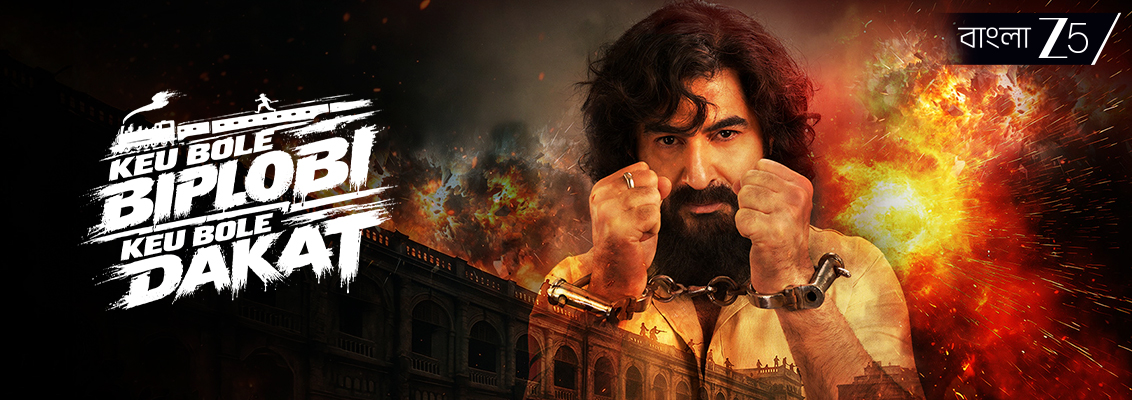
When the screen fades to black at the conclusion of Pathikrit Basu’s historical epic Keu Bole Biplobi Keu Bole Dakat, you aren’t left with a tidy, wrapped-up resolution. Instead, the film lands a powerful emotional punch that lingers long after the credits roll.
Superstar Jeet’s portrayal of Ananta—a character directly inspired by the enigmatic real-life freedom fighter and post-independence rebel leader Ananta Singh—culminates in a series of breathtaking choices. On the surface, the climax delivers high-octane drama, but underneath lies a profound philosophical statement about morality, patriotism, and the cost of rebellion.
If you haven’t watched this action Bengali movie yet, don’t worry, you can watch this premier on Zee 5 OTT.
The Burden of an Unfinished Revolution
To truly understand where Ananta stands at the end of this biopic Bengali movie, one must look at his journey. A veteran of the anti-colonial struggle who once risked everything against British rule, Ananta finds himself in a post-1947 world that hasn’t lived up to the golden promise of freedom. Corruption is thriving, systems are rigged, and the very people who bled for independence are left marginalized.
This sets up the central philosophical tension of the climax: When the law itself becomes an instrument of oppression, does breaking it make you a criminal or a crusade fighter?
Ananta’s final actions aren’t born out of desperation; they are born out of conviction. Throughout the story, authority figures brand him a dangerous outlaw (dakat), while the ordinary folk revere him as a savior (biplobi). In the crucial closing act, Ananta is forced to choose between his personal survival and his ultimate ideology. The choices he makes prove that his war was never about power or plunder—it was about holding a mirror up to a complacent society.
A Clash of Ideologies, Not Just Guns
The finale sets up an intense showdown not just between men, but between conflicting worldviews. Representing the law enforcement state, figures played by Tota Roy Chowdhury and Kaushik Sen push Ananta to his absolute limits.
What makes these final sequences of this Bengali movie so gripping isn’t just the choreography of the action, but the dialogue-heavy moral confrontations. The law demands order, regardless of fairness; Ananta demands justice, regardless of order.
When Ananta makes his definitive stand, he shifts the dynamic completely. He refuses to play by the rules of a system he deems broken, forcing both his enemies on screen and the audience in the theater to question: Who really holds the moral high ground?
The Hook: Why Ananta’s Final Choice Will Leave You Spellbound
Without giving away how his fate plays out, the climax of Keu Bole Biplobi Keu Bole Dakat hinges on a single, astonishing masterstroke by Ananta—a decision that redefines his legacy forever.
Rather than taking the easy path out or seeking personal glory, Ananta’s final move is a calculated gamble aimed at waking up a sleeping conscience.
In his final moments on screen, Ananta delivers a statement that flips the entire narrative on its head, turning a moment of apparent defeat into an undeniable victory of spirit.
The ending leaves you asking whether history remembers the men who followed the rules, or the men who had the courage to shatter them when the rules failed the people.
Experience the Legend on Screen
Jeet delivers what many critics are calling a career-defining performance, balancing raw physical dominance with a quiet, devastating emotional weight. The ending doesn’t just complete Ananta’s story—it challenges you to decide where you stand.
Was he a lawless bandit, or the last true revolutionary left standing?
Don’t wait for internet spoilers to ruin the impact. Get your Zee 5 subscription today to stream Keu Bole Biplobi Keu Bole Dakat and experience the high-stakes finale firsthand, and judge Ananta’s final choices for yourself!


