





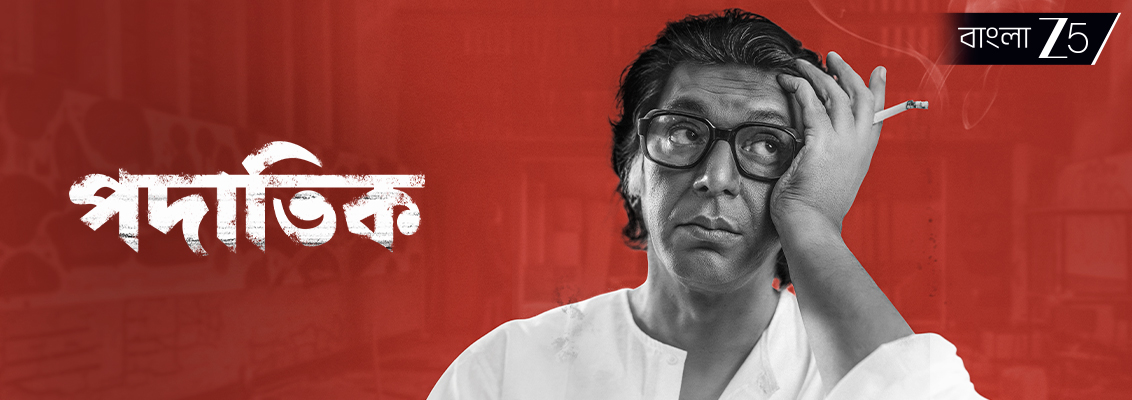
Can an artist remain uncompromising when money is limited, criticism is loud and reality refuses to fit neatly inside a screenplay?
For Mrinal Sen, artistic integrity was tested throughout the filmmaking process, from writing and financing to shooting and editing. Padatik brings viewers closer to the filmmaker behind those difficult choices: an artist constantly balancing his creative vision with practical limitations.
Learning from Failure
Mrinal Sen did not begin as a celebrated filmmaker. He later spoke critically about his debut, Raat Bhore, and reportedly preferred to leave it behind. The Mrinal Sen archive notes that he soon tried to forget his first feature.
His response to the film reflects an important aspect of his integrity: he was willing to acknowledge failure, learn from it and return to filmmaking with sharper questions.
Creativity Within a Limited Budget
Sen often revised dialogue, changed camera positions and reshaped scenes during production. At the same time, he remained aware of shooting schedules, film stock and production costs.
As Kunal Sen explains, these changes occurred before shooting, on set, and during editing, all while keeping expenses from growing uncontrollably. For Sen, creative freedom required discipline.
Imperfection and Experimentation
Sen accepted roughness when it preserved the urgency of a scene. He reportedly viewed each completed film as a kind of rehearsal, an attempt he might approach differently if given another opportunity.
This restlessness kept his work from becoming predictable. His integrity was not about creating a flawless surface but about remaining responsive to the ideas and emotions developing within the film.
Adapting Literature for Cinema
Sen treated source material as a framework rather than an untouchable blueprint. Characters, situations and narrative details could change when the demands of cinema required a different rhythm.
He was cautious about adapting long novels because compressing them could weaken their emotional and thematic depth. While he respected the original literature, he also prioritised the needs of the finished film.
Representing Social Reality Responsibly
Sen generally preferred subjects connected to lives and environments he understood directly. This familiarity helped him portray social contradictions without reducing them to simple explanations.
His films also recognised the ethical risks of representing hardship. Cinema can expose injustice, but it can also turn suffering into an attractive image. For Sen, social reality carried responsibilities that extended beyond the frame.
Balancing Ideas with Human Complexity
Political and social messages can weaken a film when they overshadow its characters. Sen therefore had to balance his ideas with believable human behaviour.
His characters were not merely tools for proving an argument. By allowing hesitation, contradiction and emotional uncertainty, he kept his films urgent without turning them into lectures.
Responding to Criticism
Sen did not always respond quietly to criticism, but he continued to refine his methods. He changed how he structured scenes, directed performances and approached recurring concerns.
This adaptability was essential because the social realities he explored were constantly changing. He could not rely on one formula or repeat the same approach indefinitely.
Integrity and Compromise
Artistic integrity did not mean rejecting every compromise. Filmmaking required collaboration with producers, performers and technicians, as well as adjustments to budgets and deadlines.
Sen accepted practical limitations while protecting the central questions behind his films. His methods could change, but his commitment to honest and socially engaged cinema remained.
Padatik and the Cost of Creative Conviction
Padatik presents Mrinal Sen’s creative persistence within a world of uncertainty, financial pressure and difficult decisions. It invites viewers to consider not only what he created but also what it took to continue creating.
A Padatik review may focus on performances or period detail, but the film’s larger subject is artistic endurance. It asks whether a filmmaker can respond to society without allowing social expectations to dictate the work.
Watch Padatik on ZEE 5
What does it cost to protect an idea when reality keeps demanding compromise? Discover Mrinal Sen’s creative struggles in Padatik on Zee 5 and carry that question beyond the screen.
Watch Padatik on Zee 5 and experience the tension between conviction, doubt and circumstance.
Frequently Asked Questions About Mrinal Sen
Q1. Which Mrinal Sen Film Was Temporarily Banned in India?
Ans. Neel Akasher Neechey faced a temporary government ban because of its political overtones. The restriction was later lifted.
Q2. Was Mrinal Sen Ever a Rajya Sabha Member?
Ans. Yes. Mrinal Sen served as a nominated member of the Rajya Sabha.
Q3. Did Mrinal Sen Hold a Leadership Position at FTII?
Ans. Yes. He led the Film and Television Institute of India, contributing to cinema beyond directing and screenwriting.
Q4. What Was Mrinal Sen’s Final Feature Film?
Ans. His final feature was Aamar Bhuban, also written as Aamar Bhuvan. It marked his return to feature filmmaking after an extended break.
Q5. Did Mrinal Sen Create Any Work for Television?
Ans. Yes. He directed the Doordarshan television series Kabhi Door Kabhi Paas, a collection of short narratives.


