





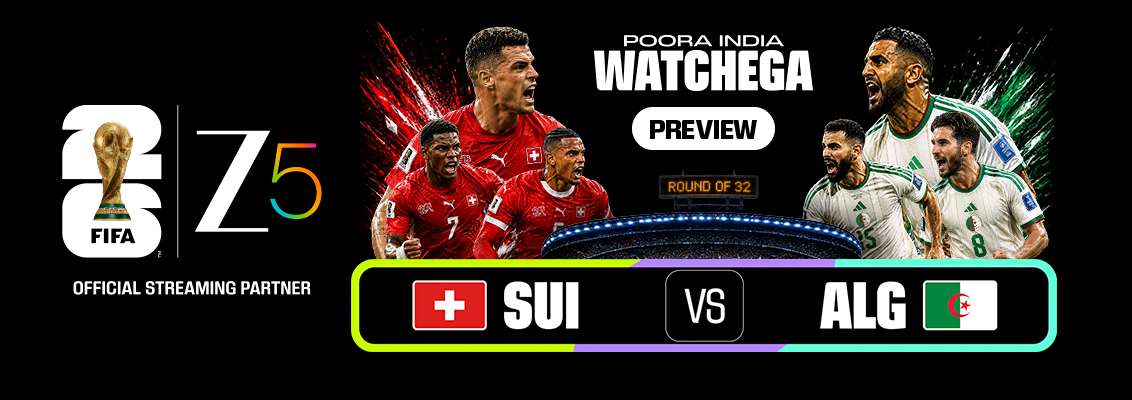
Round of 32 | BC Place, Vancouver | Thursday, 3 July — 8:30 AM IST
How They Line Up
Switzerland — 4-3-3
Gregor Kobel in goal. Silvan Widmer at right-back, Manuel Akanji and Nico Elvedi as the centre-back pairing — Akanji the dominant organiser whose Champions League experience at Manchester City shows in how early he reads danger, Elvedi alongside him with over a decade of consistency at the highest European level. Ricardo Rodríguez at left-back, 33 years old and over 100 international caps, one of the most experienced players in Yakin’s squad and the source of defensive leadership across the back four. Remo Freuler, Granit Xhaka and Michel Aebischer in the midfield triangle: Xhaka holds deepest, screening the defensive line and distributing from the base of the structure; Freuler provides the pressing intensity and ground coverage that allows Xhaka to receive without being immediately closed down; Aebischer works the zone between the lines. Dan Ndoye from the right, Breel Embolo as the central striker — 24 international goals and the physical presence to hold, link, and finish in equal measure — Ruben Vargas from the left.
Algeria — 4-2-3-1
Amine Zidane in goal. Rayan Aït-Nouri at left-back — the Manchester City player whose forward runs and direct carrying are Algeria’s most consistent wide attacking outlet — Samir Bensebaini and Aïssa Mandi as the centre-back pairing, Ilyes Belghali at right-back. Hicham Boudaoui and Ramiz Zerrouki as the double pivot: Boudaoui the more aggressive ball-hunter who presses in the middle third and disrupts opponents’ possession patterns, Zerrouki sitting narrower to provide the defensive cover and spatial control behind Boudaoui’s press. From the right, Riyad Mahrez — captain, over 100 international caps, no longer defined by pace but still entirely capable of cutting inside and delivering the ball or finish that changes a match. Amine Maza through the middle as the technical link between the lines, Farès Chaïbi from the left. Amine Gouiri leads the line — the consistent starting striker across all three of Algeria’s group games, combining movement between the lines with the goal threat Petković needs in the knockout stage.
Watch the FIFA World Cup 2026™ live in India on ZEE 5. Choose the ₹799 quarterly plan or the ₹1,699 annual plan to stream every match of the tournament.
The Battles That Will Decide This Match
Breel Embolo vs Aïssa Mandi & Samir Bensebaini — Switzerland’s 24-goal striker is the focal point around whom everything in Yakin’s final third is organised. Mandi is experienced and organised — his reading of Embolo’s movement will be Algeria’s most important defensive task for 90 minutes. Bensebaini, alongside him, provides the physical cover and the second-ball presence that keep the defensive structure intact when Embolo forces the first centre-back out of position. If Embolo receives on the turn early and faces Zidane with a clear run, Switzerland have the goal threat Algeria cannot manage for an entire match. If Mandi cuts the supply into Embolo’s feet and forces the ball back to the midfield triangle, Algeria defend without the constant pressure of a striker who knows exactly where the net is.
Riyad Mahrez vs Ricardo Rodríguez — Algeria’s most dangerous creative player operates from the right side and looks to cut inside onto his left foot — the move that made him one of the Premier League’s most feared attackers at Manchester City. He now plays for Al-Ahli. Rodríguez is experienced, reads the game early, and positions himself to force Mahrez wide and away from his preferred inside channel. His game is now built on positioning, the change of direction before the defender can react, and the delivery or finish that comes in the half-second of space he creates. Rodríguez must deny that half-second consistently — any moment where Mahrez receives between the lines facing Kobel’s goal is a moment Algeria create their best chance of the match.
Granit Xhaka vs Hicham Boudaoui — The central midfield battle that determines how Switzerland build. Xhaka at the base of Yakin’s triangle is the player Algeria need to disrupt early — his ability to receive under pressure, release the ball in a single touch, and immediately recover his position gives Switzerland’s possession sequences their rhythm and direction. Boudaoui is the player Petković sends to press that receiving moment. Athletic, combative, Boudaoui’s task is to arrive before Xhaka can settle — to make the touch uncomfortable enough that the ball goes backwards rather than forwards. In the first 25 minutes, this is the battle that sets the match’s tempo. If Boudaoui wins the first ball consistently and forces Xhaka to play around rather than through, Algeria control the central space, and Switzerland lose their most reliable attacking mechanism.
Dan Ndoye vs Rayan Aït-Nouri — Both players want to attack. Ndoye from Switzerland’s right side is direct, carries at pace, and arrives into dangerous positions from wide before defenders can recover their shape. Aït-Nouri at left-back for Algeria is exactly the kind of full-back whose attacking instinct creates a problem when the opposition wins possession quickly — he pushes high, his defensive recovery can be slow, and when the ball is turned over and Ndoye is facing him in a one-on-one, the space behind Aït-Nouri is exactly what Yakin’s transition is designed to exploit.
Tactical Breakdown
Switzerland’s 4-3-3 uses width and ball circulation in the midfield triangle to stretch Algeria’s 4-2-3-1 defensive block. Ndoye and Vargas pin Algeria’s fullbacks wide; Xhaka and Freuler circulate the ball deep, drawing Boudaoui and Zerrouki out of their central positions; and when the space opens between the lines, Aebischer arrives to receive and play Embolo in with a forward pass before the defensive line can recover. The design is patient but purposeful — Switzerland don’t rush possession; they wait for Algeria’s compact shape to shift before committing the forward pass.
Algeria’s 4-2-3-1 compresses into a mid-block out of possession, with Boudaoui and Zerrouki sitting narrowly to protect the central zone and Mahrez positioned to counterpunch from the transition pass. When Boudaoui or Zerrouki wins the ball in the middle third, the first option is the switch to Mahrez dropping wide on the right — and from there, the quick ball in behind Rodríguez for Gouiri or Aït-Nouri overlapping. Switzerland’s defensive vulnerability is in the transition phase: when Ndoye and Vargas are committed high, and Algeria win the ball centrally, the channels behind them open for exactly the sequence Algeria have practised. The two quick passes — Boudaoui to Mahrez, Mahrez in behind — are how Algeria create their most dangerous moments in Vancouver.
ZEE 5 is the official streaming home for the FIFA World Cup 2026™ in India. Switzerland vs Algeria kicks off at 8:30 AM IST on 3 July — check available ZEE5 FIFA subscription plans and stream the match live.
Disclaimer: Subscription pack prices are subject to change from time to time. Please visit the subscription page for the most up-to-date pricing information.


