





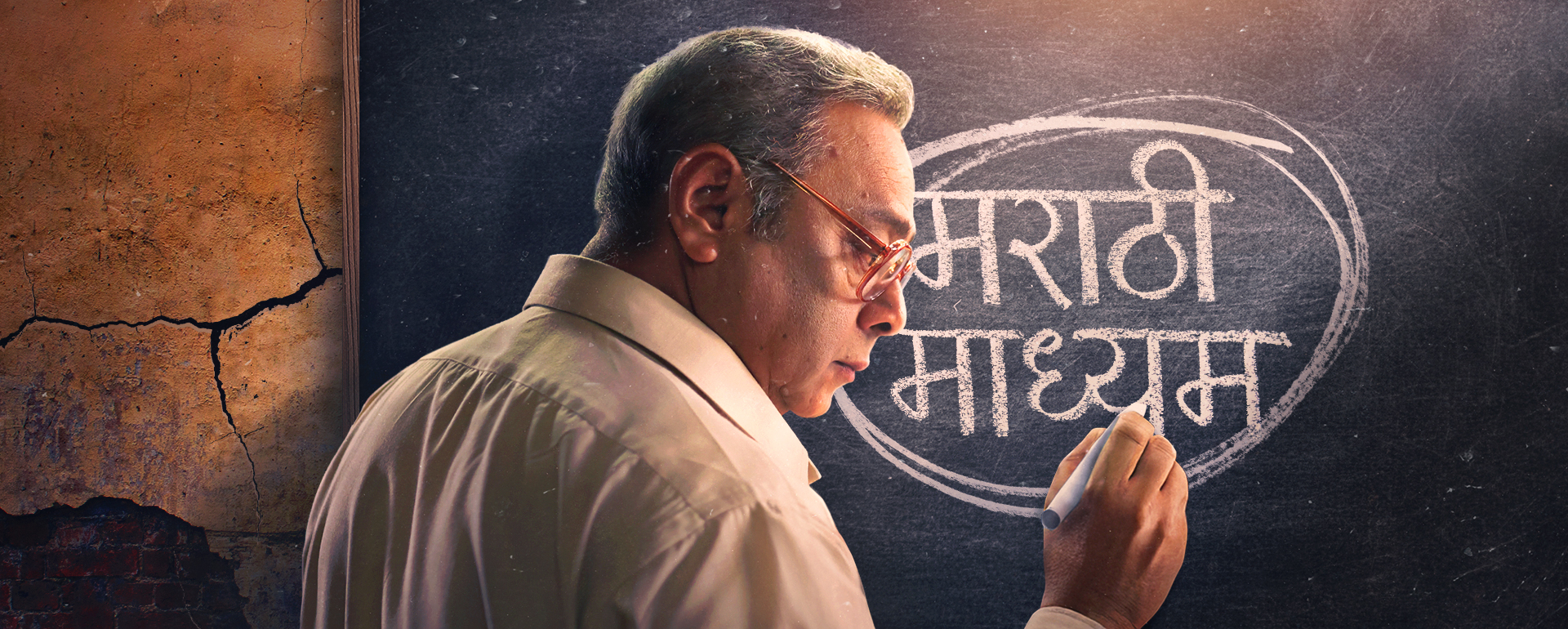
The Krantijyoti Vidyalay Marathi Madhyam film moves viewers because it shows a school as a close community, not just walls and a clock. In Krantijyoti Vidyalay Marathi Madhyam, Principal Dinkar seeks help from former students to guard a Marathi-medium school that has taught generations from demolition, and the story unfolds into courage, survival, and pride.
People believe this plot because they know one truth: one steady teacher can hold a school together when systems crack. One teacher can pull a child out of silence and into confidence. One teacher can make Marathi feel like a power, not a “backup language.”
We highlight dedicated teachers from Maharashtra who serve in government schools and Marathi-medium classes, and who lift learning with ideas that appear simple but shape lives.
Those who admired the Krantijyoti Vidyalay Marathi Madhyam movie will see the same spark—care, strength, and a clear stand against limiting a child’s future.
What A “Krantijyoti Teacher” Looks Like In Real Life
A Krantijyoti teacher does not wait for perfect conditions. They work with what stands before them: chalk, a phone, small shelves, cracked walls, and a child who doubts himself.
They do five things again and again:
- They protect dignity—no child feels “less” because of their background.
- They teach in the language of understanding—Marathi first, then the world.
- They pull the community in—parents, alumni, local support.
- They build courage—the kind a child carries into exams and life.
- They keep showing up—even when no one posts about it.
Now, meet a few real examples.
Ranjitsinh Disale: A Small School, A Big Vision
The Global Teacher Prize chose Ranjitsinh Disale as the 2020 award winner for his work at Zilla Parishad Primary School in Paritewadi, Solapur district.
That headline sounds huge, but his work looks practical: he used QR codes in learning materials so students could access audio poems, video lessons, and learning support.
What does this mean on the ground?
A child who misses a concept in class gets another route to learn at home. A parent who cannot tutor still gets a tool that supports the child. A teacher extends the classroom beyond a blackboard.
The Krantijyoti Vidyalay Marathi Madhyam, a Marathi drama movie carries the idea that a school survives because someone refuses to let hope die. Disale’s story carries that same logic: small steps, strong intent, steady follow-through.
Mrunal Ganjale: Tech With A Marathi Classroom Heart
In Pune district, Mrunal Ganjale teaches at a Zilla Parishad school in the Ambegaon area. Reports credit her with using tools like VR and AR to make lessons feel real for children in a primary school setting.
A government press note on the National Teachers’ Award 2023 explains the award event and recognition framework, and multiple reports list her among the awardees for that year.
Local coverage in Marathi also notes her awards track record and describes her as an initiative-driven teacher.
Here’s the part people miss: tech does not replace a teacher.
Tech only works when a teacher holds the child’s attention and trust. A VR “visit” to a fort means nothing if the child feels fear in class. Teachers like Ganjale make tools serve learning, not ego.
If the Krantijyoti Vidyalay Marathi Madhyam, a drama movie shows a principal calling alumni to save a Marathi-medium school, teachers like Ganjale show how the school can fight back with learning quality, not only sentiment.
Javed Tamboli: German In A Rural Marathi-Medium School, For Confidence
A Times of India report describes how rural teachers across Maharashtra introduced foreign languages like German and Japanese in government-run Marathi-medium schools.
The same report highlights Javed Tamboli in Chaukool village (Sindhudurg), who uses a “Joyful Saturday” idea to bring German into the school routine and keep student interest alive.
Regional coverage from Maharashtra Times also features his work in a Zilla Parishad school.
Let’s be honest: a rural child does not need German to love Marathi.
They need German (or any new skill) to feel that their pin code does not limit their future.
That confidence mirrors the Krantijyoti Vidyalay Marathi Madhyam movie theme: Marathi-medium does not mean small dreams. Marathi-medium can mean strong roots and wide wings.
Sunita Lahane Dhoke: Japanese Lessons, Started From Student Curiosity
The same Times of India story talks about Sunita Lahane Dhoke in Vadona village (Aurangabad area), who began teaching Japanese to students after the pandemic era, inspired by student curiosity about Japan and technology.
This is the kind of “unsung” work people rarely track. No big stage, no fancy lab, no budget line item. A teacher gains knowledge first and then teaches children who never expected to speak a different language in their village classroom.
The comedy movie Krantijyoti Vidyalay Marathi Madhyam, story shows this teacher as the person who stays beyond school hours to guide a child through reading, without any request.
Balaji Jadhav: A Teacher Who Thinks Beyond Boundaries
The Times of India highlights Balaji Jadhav of Satara district, who taught Japanese to students since he trusted that language skills expand chances for rural children.
Maharashtra families wrestle with a single doubt: switch medium for opportunity, or stay in Marathi-medium and depend on the child to catch up later.
He proves that a Marathi-medium class can also offer global skills when a teacher leads with strong intent.
That argument sits at the centre of why the Marathi comedy movie, Krantijyoti Vidyalay Marathi Madhyam, resonates with viewers who grew up with Marathi-medium pride and modern pressure in the same home.
Neha Gokhare: German In Yavatmal’s Mendholi ZP School
A recent Times of India report shares a strong example from Yavatmal district: Neha Gokhare, an assistant teacher at a Zilla Parishad school in Mendholi, introduced German learning for students from Classes 1 to 7, and the report links her training to state-level initiatives and SCERT-linked pathways.
What stands out here: the community first reacted with surprise, then pride. The children began to speak simple sentences, count, spell, and hold short conversations in German.
That shift matters more than the language itself. A child who speaks one new sentence without fear learns a deeper lesson: “I can learn hard things.”
That is also the hidden lesson inside the Krantijyoti Vidyalay Marathi Madhyam movie—a school does not exist to protect a building; it exists to protect belief.
Why Marathi-Medium Teachers’ Role Feels Important More Than Ever
When people debate the media, they often talk about jobs and status. They overlook the first role of school: help a child grasp the world around them.
UNESCO presents research that shows mother tongue education encourages inclusion and improves learning results, with strong value in early grades.
That research does not say “avoid English.” It says: build foundations in the language a child understands best, then add more languages with care.
That approach matches the emotional spine of the Krantijyoti Vidyalay Marathi Madhyam movie: Marathi-medium schools can stand tall when people invest in them, through teachers, community, and learning quality.
A Small Ask From Us, As ZEE5
When you watch the Krantijyoti Vidyalay Marathi Madhyam, don’t stop at nostalgia. Use that emotion as a lens. Think of the teacher who made you read your first paragraph with confidence. Think of the teacher who let you fail without shame.
Then do one simple thing: respect teachers in Marathi-medium and government schools the way you respect “top schools.” Because most change begins in the classrooms that don’t trend.
And yes—stream the Krantijyoti movie when you want a story that reminds you what schools can mean in Maharashtra.


