





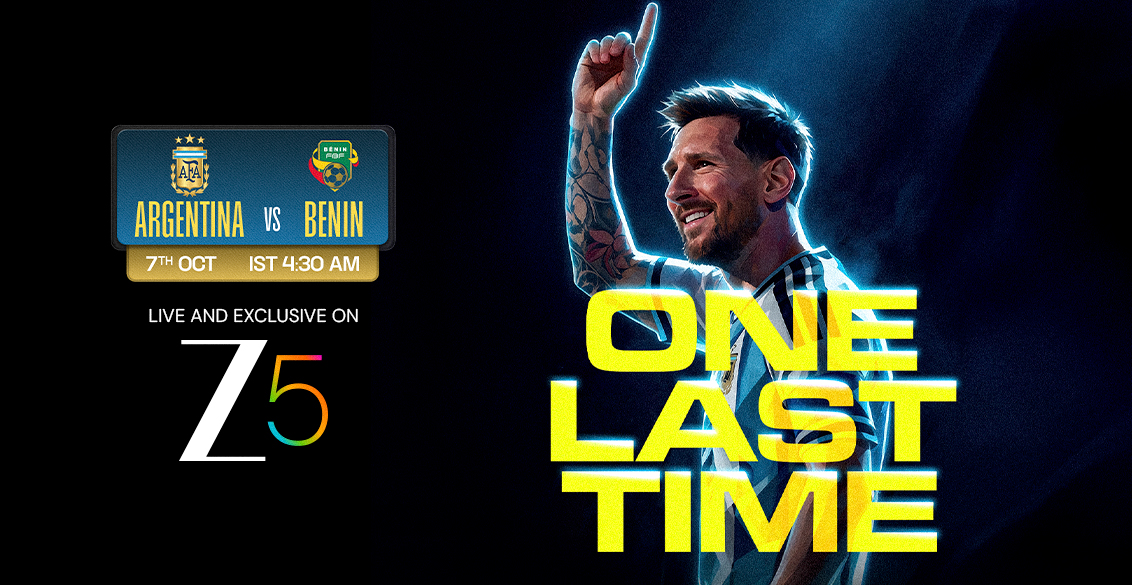
There are moments in sports that feel less like competition and more like history pausing to draw a breath.
For twenty-one years, Lionel Messi’s relationship with the football pitch was a canvas of impossible geometry, quiet genius, and moments of unadulterated transcendence. But every masterpiece must eventually find its final brushstroke. On a crisp evening at the Estadio Monumental in Buenos Aires, more than 85,000 fans gathered not just to watch a match, but to witness the closing chapter of an era that defined a generation.
Argentina Prepares to Say Goodbye
The match against Benin had been dubbed “The Last Tango”—a title heavy with romanticism and laced with grief. From the moment the team bus wove through the roaring, tear-stained crowds lining the streets, the air felt thick. This wasn’t merely an international friendly; it was a nation attempting to hold onto a miracle before it slipped into memory.
When the national anthem played, Messi stood alongside his sons, eyes brimming with tears. Next to him, head coach Lionel Scaloni wept openly. Around them, the stadium held its breath. In a gesture that transcended the sport, play even paused in the 10th minute as the entire stadium rose to applaud, while opposition players stepped forward to shake his hand. It was a shared understanding: they were all witnesses to something that would never happen again.
One Final Act of Genius – Last goal by Messi
The script demanded one last moment of brilliance, and Messi—as he had done a thousand times before—delivered.
In the 71st minute, after already setting up two goals with his trademark vision, Messi stepped up to take a penalty. Time seemed to slow. As he struck the ball with his left foot, launching it into the roof of the net for his 126th international goal, the Monumental exploded into a chorus of “Messi! Messi!” It was a roar built on two decades of heartbreaks, late-blooming glory, and the ultimate triumph in Qatar.
The Saddest Day and the Fondest Farewell
When the final whistle blew, the sky over Buenos Aires lit up with a drone light show depicting Messi lifting the World Cup. But the real emotion belonged down on the pitch, where Messi took the microphone to bid farewell.
“Now, inevitably, I face the saddest day of my career: saying goodbye to the national team,” he confessed, his voice cracking under the emotional weight of 208 international caps. “I’m going to miss you; I’m going to miss defending the national team’s colors, but now I’ll be right there alongside you, supporting these guys and everyone who comes after them. Always, always united.”
His words carried the grief of a man leaving behind his greatest love, but also the gratitude of someone who had given everything he had to his country. Thinking of his late father, Jorge, who had passed away just weeks earlier, Messi’s final words were simple, raw, and unadorned: “I just want to tell you that I love you and I’ll miss you. I’m proud to be Argentine and to have fulfilled this dream with all of you.”
An Eternal Legacy Written in Magic
For years, the debate surrounding Messi was about numbers, trophies, and comparisons. But as he walked off the pitch in Argentina’s shirt for the very last time, none of that mattered. What remained was the feeling he gave to millions—the sensation that, for 90 minutes at a time, magic was real and lived in the boots of a quiet boy from Rosario.
The game will go on. New stars will rise, and records will fall. But as the lights dimmed on the Monumental, football knew it was closing the door on something singular. Lionel Messi’s last tango was over, leaving behind a silence that will echo for decades to come.


